

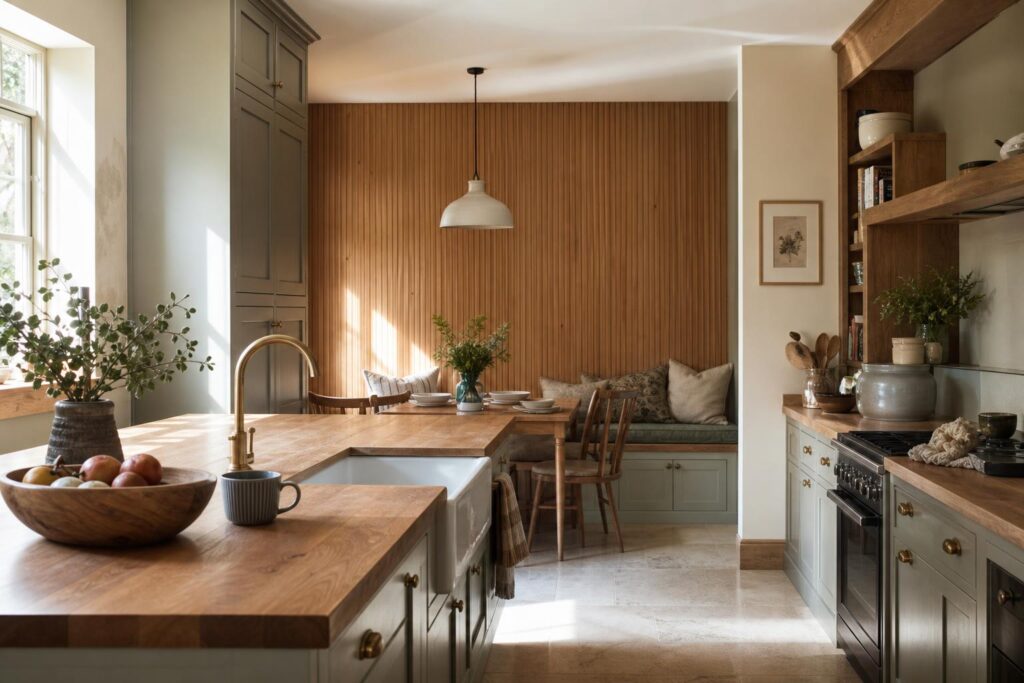
Quiet kitchen design is not about making a room feel empty or precious. It is about building a kitchen that works hard without clattering, echoing and annoying you every time someone makes a cup of tea. In our experience, this is one of those details homeowners only think about after a kitchen is fitted, which is a shame, because it is much easier to get right at the planning stage.
The kitchen has become the room where everything happens. Cooking, homework, phone calls, dogs under your feet, someone unloading the dishwasher while someone else is trying to talk. A good-looking kitchen is lovely, but if it sounds like a toolbox every morning, the shine wears off quickly.
Why Quiet Kitchen Design Is Becoming More Important
Open-plan and broken-plan layouts have changed what we expect from a kitchen. Years ago, a noisy extractor or a drawer that slammed was mostly contained behind a door. Now that same noise travels straight into the dining area, snug or living space.
There is also a practical reason. More people work from home, more families use the kitchen as a shared room, and more homeowners want a kitchen that feels settled rather than showy. Quiet kitchen design is part of that shift. It is less about chasing a trend and more about making everyday life easier.
Honest truth is, a calm kitchen usually comes down to the boring details done properly. Cabinet construction, door weight, hinges, runners, appliances, flooring, worktops and how the whole lot is fitted together. None of it sounds glamorous, but you notice it every day.
Quiet Kitchen Design Starts With Proper Cabinetry
Cheap cabinets can be loud. Thin carcasses, loose backs, lightweight doors and poor fixings all add to the noise. You get rattles, hollow knocks and doors that feel flimsy. It is the kind of thing that may not jump out in a showroom, but it becomes obvious once the kitchen is being used properly.
Bespoke joinery gives you more control. A well-made cabinet has weight, strength and stability. Doors sit properly. Drawers run smoothly. Shelves do not bounce every time you put a stack of plates away. If something needs reinforcing because it will carry heavy pans or appliances, that can be built in from the start.
Soft-close hinges and drawer runners help, but they are not magic on their own. Fit them to poor cabinetry and you still have a poor kitchen, just one that closes slightly more slowly. The real difference is when good hardware is paired with solid joinery and careful fitting.
Think About Appliances Before You Order the Kitchen
Appliances can be the biggest source of kitchen noise. Extractors, dishwashers, washing machines, fridge freezers and coffee machines all bring their own racket. Some are unavoidable, but plenty can be reduced with sensible planning.
- Choose quieter appliance models where it matters, especially dishwashers and extractors.
- Do not box appliances in so tightly that vibration has nowhere to go.
- Use proper panels, fixings and ventilation around integrated appliances.
- Keep noisy appliances away from seating areas where possible.
- Think carefully before putting laundry appliances in an open kitchen.
We have seen plenty of kitchens where the layout looked great on paper, but the extractor was too loud for conversation or the washing machine shook through the cabinets. A good joiner will ask how you actually use the room, not just where the sockets happen to be.
Materials Make a Difference to How a Kitchen Sounds
Hard surfaces bounce sound. Stone worktops, tiled floors, glass, large windows and bare plaster walls can all make a kitchen feel sharper and louder. That does not mean you should avoid them, but you need to balance them.
Timber is useful here because it softens a room visually and acoustically. Solid wood shelving, framed doors, timber wall panelling or a built-in bench can all take the edge off a hard kitchen. Even the way a cabinet door is built changes the sound it makes when it closes.
Flooring matters too. A tiled floor is practical, but it can make a room echo if everything else is hard as well. Timber, cork-backed products, rugs in nearby dining areas and upholstered seating can all help the space feel less harsh.
Built-In Seating Can Help Calm the Room
A built-in bench or breakfast nook is not just a storage trick. It can make the kitchen feel more settled. Upholstered pads, timber framing and a defined seating area can soften the sound in a room that might otherwise be all doors, drawers and worktops.
It also helps with how people move through the kitchen. If seating is planned properly, you avoid people dragging chairs across the floor or perching in the wrong place while someone is cooking. That sounds minor, but daily use is where good design proves itself.
Do Not Forget the Small Joinery Details
Quiet kitchen design often comes down to small choices. Drawer inserts stop cutlery sliding about. Deep pan drawers need proper runners. Pull-out bins need to be fitted firmly or they will knock every time they are used. Tall pantry doors need good hinges and proper alignment so they do not swing, scrape or rattle.
This is where bespoke work earns its keep. If you cook with cast iron pans, your drawers can be made for that weight. If you have a noisy coffee machine, it can sit behind a pocket door or in a breakfast cupboard away from the main work area. If you want a calm dining corner, the joinery can be planned around it.
Off-the-shelf kitchens are built to standard assumptions. Bespoke joinery can be built around the way you live, including the sounds you would rather not hear every morning.
A Quiet Kitchen Still Needs to Be Practical
There is no point creating a kitchen that feels calm but is awkward to use. You still need durable surfaces, sensible storage, good lighting and enough workspace. The trick is to make those practical choices with noise in mind.
For example, a proper prep area keeps mess and movement in one place. A well-planned dishwasher position makes unloading quicker and less disruptive. Good drawer organisation means fewer things clanging around. A quieter extractor means you are more likely to use it, which is better for the room long term.
Worth getting right the first time, because once the kitchen is fitted, fixing noise problems can be awkward and expensive.
Final Thoughts on Quiet Kitchen Design
Quiet kitchen design is not a gimmick. It is good planning, good joinery and good fitting. The best kitchens do not just look smart on the day they are finished. They feel right when you are making breakfast, unloading the dishwasher, helping with homework or sitting down at the end of the day.
If you are planning a new kitchen or bespoke joinery project, think about how the room will sound as well as how it will look. Give us a call on 07904 794280 or message us on Facebook. We are always happy to talk through what is possible and what is worth doing properly.