

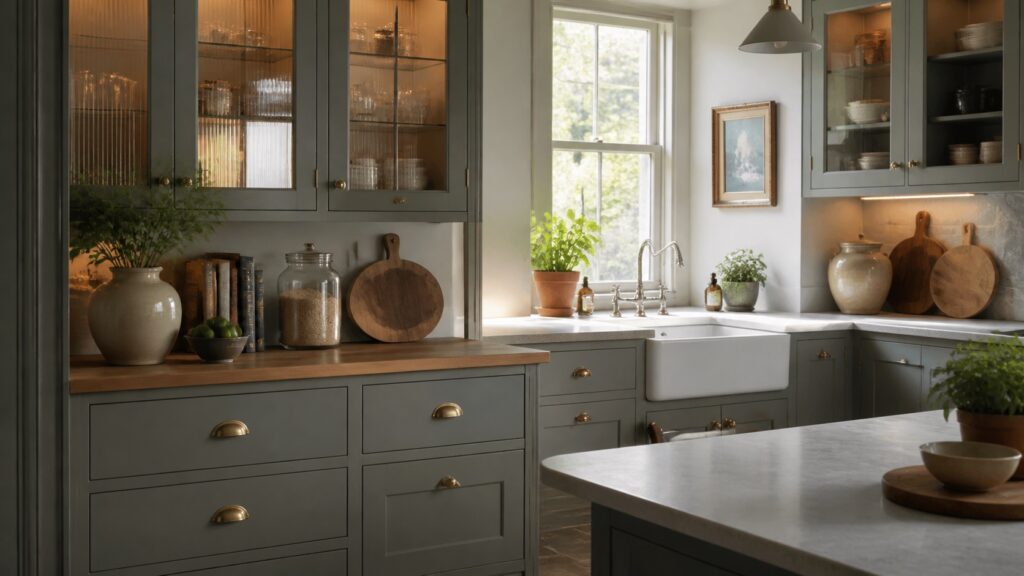
Glazed kitchen cabinets are having a proper moment in 2026, and for once it is a trend that can be genuinely useful. Done well, glass-fronted cabinetry breaks up a wall of solid doors, lets a kitchen feel lighter, and gives everyday pieces a home that looks considered rather than cluttered.
Done badly, it becomes a row of see-through cupboards showing cereal boxes, chipped mugs and a jumble of appliance manuals. Honest truth is, glazed kitchen cabinets need more thought than a standard wall cupboard. The glass, frame, hinges, internal finish and lighting all show. You cannot hide sloppy work behind a painted door.
In our experience, this is exactly where bespoke joinery earns its keep. A good joiner will not just ask where you want the glass. They will ask what is going inside, how often you use it, what will be lit, what needs hiding, and how the cabinet sits with the rest of the room.
Why glazed kitchen cabinets are popular again
The big shift is that homeowners are moving away from kitchens that look too flat. For a few years, everything was very clean, very plain and sometimes a bit lifeless. Now people still want practical kitchens, but with more warmth, more character and a few details that feel personal.
Glazed kitchen cabinets help with that because they add depth. You see a little shadow behind the door. You see timber shelves, stacked bowls, glassware, recipe books or ceramics. It makes the room feel more layered without adding more furniture.
They also work well in older UK homes, where a full run of solid wall units can feel heavy. A glazed section beside a chimney breast, around a dresser-style cabinet, or above a worktop can make the kitchen feel more like proper fitted furniture and less like a showroom display.
Clear glass, reeded glass or something in between?
The glass choice matters. Clear glass is lovely if you are tidy and the cabinet is for display pieces. It gives the sharpest look and shows off nice shelves, painted interiors and good proportions. It is less forgiving, though. If the cupboard is going to hold mismatched mugs and plastic tubs, clear glass will tell on you every single day.
Reeded glass is a strong choice for real homes. It softens what is behind the door, catches light nicely and gives a cabinet a bit of texture. It still feels open, but it does not reveal every last detail. Fluted and ribbed glass are similar options, though the exact pattern and thickness can change the whole feel of the cabinet.
Seeded, smoked or lightly obscured glass can also work, especially in period homes or kitchens with warmer timber tones. The trick is not choosing glass from a tiny sample in isolation. Hold it against the cabinet colour, worktop, wall colour and handles. Glass reflects everything around it, so what looks subtle in a sample can look quite different once fitted.
Glazed kitchen cabinets need proper frames
A glass door is only as good as the frame around it. Thin, mean-looking rails can make a cabinet feel flimsy. Overly chunky frames can make it look clumsy. The proportions need to suit the rest of the kitchen.
This is one of those details that gets missed when people pick from standard ranges. A bespoke cabinet can be sized so the rails, stiles and glazing bars actually line up with the units below. That might sound small, but it is the kind of thing you notice every day once the kitchen is fitted.
Hinges need thinking through as well. Glass doors are often heavier than expected, especially when made properly. The hinge choice, door size and opening angle all affect how the cabinet feels in use. A door that drops, rattles or never quite closes properly will spoil the whole thing.
Plan the inside before you fit the outside
With solid doors, the inside of a cabinet is mostly about function. With glazed doors, the inside becomes part of the design. That means the back panel, shelves, shelf pins, lighting cables and finish all matter.
- Painted interiors can make glassware and ceramics stand out.
- Timber interiors add warmth and work well with oak, walnut or painted shaker kitchens.
- Adjustable shelves are useful, but fixed shelves can look cleaner.
- Internal lighting needs cable routes planned before the cabinet is built.
We have seen glazed cabinets spoiled by ugly shelf holes, visible wiring or lighting that glares straight through the glass. It is all avoidable if the joinery is designed properly from the start.
Where glazed kitchen cabinets work best
You do not need glass everywhere. In fact, most kitchens look better when glazed cabinets are used with a bit of restraint. One or two well-placed sections usually have more impact than a full wall of glass doors.
A dresser-style run is a good option, especially if it sits on the worktop and stores cups, plates or serving pieces. Glazed wall cabinets either side of an extractor can also work, provided the extraction has been planned properly and the cupboards will not get hit with steam and grease every day.
Tall glazed cabinets can be excellent for pantry overflow, glassware or breakfast things, but they need proper internal zoning. If everything is visible from top to bottom, the cabinet needs to be organised in a way that makes sense. Otherwise it quickly looks messy.
Do glazed cabinets suit busy family kitchens?
Yes, but you need to be honest about what will go in them. If the kitchen is busy, reeded glass is often better than clear. You might also keep glazed doors for the pieces that are naturally neat, such as glasses, bowls, jugs, baking dishes or coffee cups.
Everyday food storage, cleaning products and plastic containers are usually better behind solid doors or inside a larder cupboard. There is no shame in hiding the practical stuff. A good kitchen should make daily life easier, not turn the whole room into a display cabinet you have to keep perfect.
What to ask your joiner before choosing glazed kitchen cabinets
If you are considering glazed kitchen cabinets, ask a few practical questions early:
- What type of glass suits how we will use the cupboard?
- Will the door proportions line up with the rest of the kitchen?
- How will the shelves be finished?
- Can lighting be hidden neatly?
- Will the hinges cope with the door size and weight?
- What items are we actually planning to store in there?
Those questions are not fussy. They are the difference between a kitchen detail that looks good on day one and one that still feels right years later.
Worth getting right the first time
Glazed kitchen cabinets can add real character to a kitchen, but they are not a shortcut. They need careful joinery, decent materials and proper planning. The frame, glass, lighting and interior all have to work together.
In a bespoke kitchen, that is the point. You are not squeezing a glass door into a standard unit and hoping for the best. You are building the cabinet around the room, the homeowner and the way the kitchen will actually be used.
Thinking about a new kitchen or a bespoke joinery project? Give us a call on 07904 794280 or message us on Facebook. We are always happy to talk through what will work in your space.