

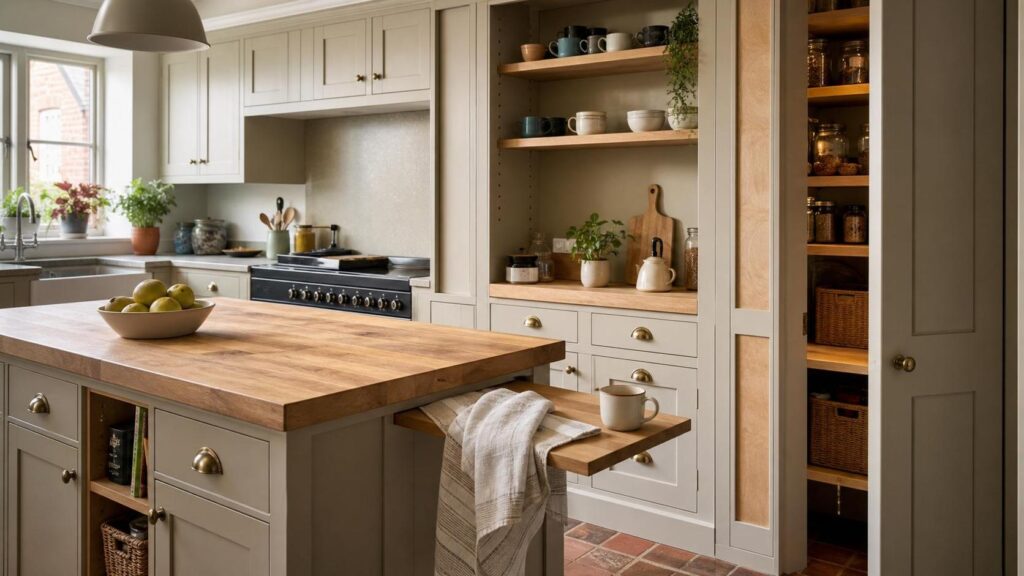
Flexible kitchen joinery is becoming one of the more sensible kitchen ideas for 2026. Not because it sounds clever on a mood board, but because real homes rarely stay the same for long. Children grow, working patterns change, hobbies take over cupboards, and suddenly the kitchen that looked spot on five years ago starts making everyday life harder than it needs to be.
In our experience, fixed layouts are where a lot of kitchens quietly fall down. The doors still shut, the worktops still look tidy, but the storage is fighting the way the household actually lives. A good bespoke kitchen should not just fit the room on day one. It should have enough thought in it to keep working when life shifts a bit.
What Flexible Kitchen Joinery Actually Means
Flexible kitchen joinery does not mean wobbly furniture, temporary fittings or trendy gadgets that will annoy you by Christmas. It means properly made cabinetry and storage that gives you options. Adjustable shelves, pull-out boards, removable dividers, breakfast stations, larder sections, appliance garages, moveable trays, and clever internal fittings all come under the same heading when they are built well.
The key is that the flexibility should feel built in, not bolted on. A shelf that can move up by 50mm is useful. A drawer that can be reconfigured from baking kit to school snacks to dog supplies is useful. A pull-out work surface that gives you extra prep space in a narrow kitchen is useful. A cupboard full of flimsy plastic accessories is usually just a cupboard full of things waiting to break.
Why Flexible Kitchen Joinery Is Growing in 2026
Homeowners are getting more careful about renovation spend. That does not mean everyone wants the cheapest kitchen. It means people want to know the money is going into something that will earn its keep. A fixed kitchen that only works for one very specific routine can feel like poor value once that routine changes.
We are also seeing kitchens used for more than cooking. They are homework spots, laptop spaces, coffee corners, storage hubs, dumping grounds, entertaining rooms and sometimes the only room in the house where everything seems to happen at once. Flexible joinery helps because it lets one area do more than one job without the whole room feeling cluttered.
There is another reason too. A lot of people are staying put and improving what they already have. If you are investing in a new kitchen in a home you plan to live in for years, it is worth asking whether the layout will still make sense later. Honest truth is, the prettiest cabinet in the world will irritate you if it stores the wrong things in the wrong place.
Where Flexibility Really Earns Its Keep
The best places for flexible kitchen joinery are the areas that get used hard every day. Larder cupboards are a good example. Deep shelves look generous at first, but they often end up hiding tins at the back. Shallow shelves, adjustable racks and pull-out sections usually work better because you can see what you own and change the setup as your shopping habits change.
Islands and peninsulas are another good place to think harder. A fixed block of drawers is fine if it suits the room, but a pull-out prep board, tray storage, open cookbook section or charging drawer can make the island much more useful. It is the kind of thing you notice every day, especially in a busy kitchen where worktop space disappears quickly.
Wall storage is worth a proper look as well. Adjustable open shelves, countertop cabinets and dresser-style sections can take pressure off the main cupboards. They also stop the kitchen feeling too rigid. Used carefully, they give you a place for mugs, breakfast bits, serving bowls or the things you reach for constantly.
- Pull-out boards for extra prep space in compact kitchens
- Adjustable larder shelving for changing food storage
- Drawer dividers that can be moved rather than fixed forever
- Countertop cupboards for coffee, breakfast or baking kit
- Mixed open and closed storage so everyday items stay close without looking messy
The Difference Between Clever and Complicated
There is a line between useful flexibility and overcomplication. We have seen kitchens where every cupboard has a special mechanism, but half of them are awkward to use. That is not good design. A good joiner will tell you when a simple shelf, drawer or cupboard will do the job better than a fancy fitting.
Mechanisms need space, strength and access. If a pull-out unit is too narrow, it can feel flimsy. If a corner solution steals more storage than it gives back, it is not worth it. If an internal fitting makes cleaning harder, that matters too. Good flexible kitchen joinery starts with the routine of the house, then works backwards to the cabinet design.
Materials matter here. Adjustable shelves still need strong pin positions. Pull-out boards need decent runners and a proper thickness. Pantry doors need to hang true when they are loaded. Drawers need to cope with weight. This is where bespoke joinery has a real advantage over flat-pack. It can be made to suit the exact opening, the exact load and the way the homeowner will actually use it.
Questions to Ask Before You Fit a Flexible Kitchen
Before choosing the layout, it helps to be honest about how the kitchen is used now. Not how you imagine it looking when everything is perfectly tidy. Real life matters. Where does the post land? Where do the children leave bottles and lunchboxes? Where does the air fryer live? What gets used every morning? Which cupboard do you currently hate opening?
Those answers often shape the joinery more than colour choices do. A breakfast cupboard near the kettle might be better than another run of standard wall units. A tall larder with shallow shelves might beat a deep pantry. A pull-out tray space might save your worktop from becoming a permanent appliance park.
It is also worth thinking about future changes. You do not need to predict every detail, but you can build in sensible options. Adjustable shelving costs little compared with replacing a cupboard later. Stronger drawers can be repurposed. A well-made dresser section can move from glassware to school snacks to serving dishes without looking out of place.
Why Bespoke Makes This Easier
Off-the-shelf kitchens can look neat, but they are usually built around standard sizes. That often means compromise at the edges, awkward fillers and storage that nearly works. Bespoke joinery lets the kitchen fit the room properly. More importantly, it lets the storage fit the person using it.
If you bake, the drawers can be built for tins, trays and heavy mixers. If you cook from scratch, the larder can be set out so spices, oils and dry goods are easy to see. If the room is narrow, a pull-out surface or slim dresser might be more useful than forcing in another full-depth cabinet. Worth getting right the first time.
The best flexible kitchens do not shout about themselves. They just make everyday jobs easier. Doors open cleanly. The things you need are where your hand expects them to be. Shelves can be moved when your routine changes. The room feels calmer because the joinery has done the thinking for you.
Planning Flexible Kitchen Joinery for Your Home
If you are planning a kitchen in 2026, do not just ask what style is in. Ask what the kitchen needs to cope with. Ask where flexibility would genuinely help, and where simple, solid joinery is the better answer. The aim is not to fill every cupboard with clever bits. The aim is to build a kitchen that feels practical on a wet Tuesday morning, not just impressive on fitting day.
Thinking about a new kitchen or a piece of bespoke joinery that works harder for your home? Give us a call on 07904 794280 or message us on Facebook. We are always happy to talk through what is possible and what is actually worth doing.