

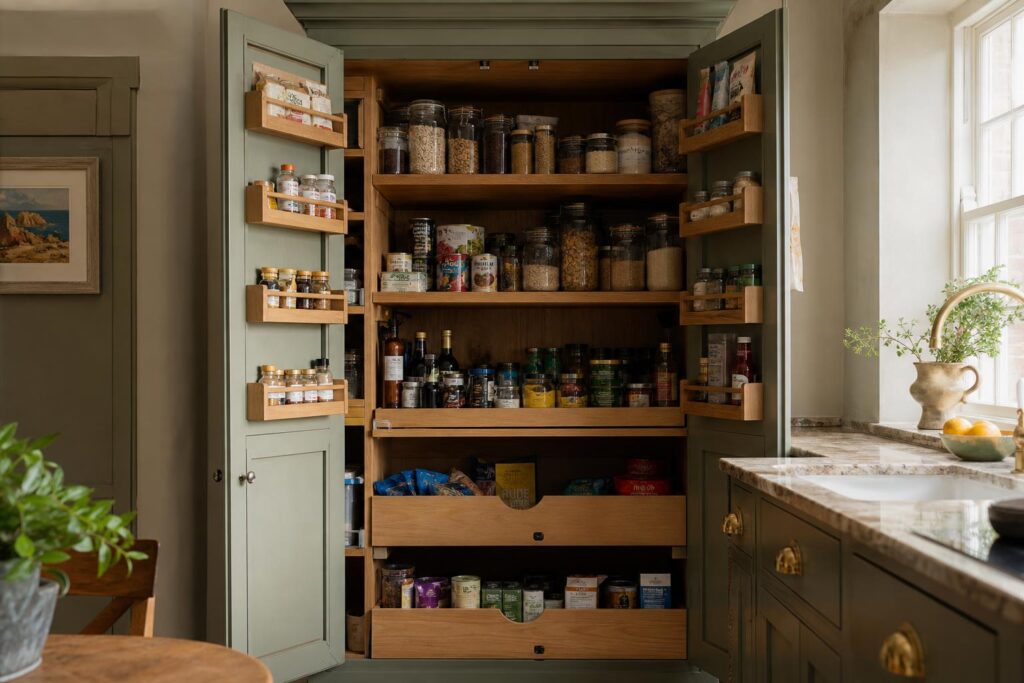
A bespoke larder cupboard is one of those kitchen details that sounds simple until you start using it every day. Done well, it keeps food, small appliances, baking kit and breakfast bits exactly where you need them. Done badly, it becomes a deep, dark cave where tins go to disappear.
In 2026, more homeowners are asking for kitchens that feel calmer, warmer and easier to live with. Not show kitchens. Real kitchens. The sort where the toaster has a home, the cereal is not balanced on top of the fridge, and you do not have to empty half a cupboard to find the paprika. That is where a properly planned larder cupboard earns its keep.
Honest truth is, size is not the clever bit. A big larder with poor internal joinery is still poor storage. The clever bit is making everything visible, reachable and suited to the way you actually cook.
Why a bespoke larder cupboard works better than a deep kitchen cupboard
Standard kitchen cupboards are often too deep for food storage. They look generous on a plan, but once you put jars, packets and tins in them, the front row hides everything behind it. Before long, you are buying things twice because you cannot see what you already own.
A bespoke larder cupboard solves that by thinking in layers. Shallow shelves keep jars and packets visible. Door racks are brilliant for spices, oils, sauces and smaller items. Pull-out trays help with heavier things like mixers, flour tubs or breakfast baskets. None of this is flashy. It is just sensible joinery doing a proper job.
We have seen plenty of lovely kitchens let down by one badly planned tall cupboard. It might have smart doors and expensive handles, but inside it is just a stack of fixed shelves at awkward heights. That is not bespoke. That is a box with a nice face on it.
The 2026 larder trend is really about calmer kitchens
One of the biggest kitchen shifts at the moment is the move away from cluttered worktops. People still want their kitchens to feel lived in, but they do not want every appliance, packet and jar on show. A larder cupboard gives you a place to put the everyday mess without pretending it does not exist.
That is why larders are coming back in such a strong way. They suit older homes, cottages, extensions and modern family kitchens because they bring order without making the room feel cold. You can have painted doors on the outside, oak or birch ply internals inside, and storage that feels solid every time you open it.
It is the kind of thing you notice every day. Doors that open cleanly. Shelves set at the right height. No wasted gap above the cereal boxes. No rummaging. No balancing bags of flour on top of tins because the shelf spacing was guessed.
What should go inside a bespoke larder cupboard?
There is no single right answer, because every household uses a kitchen differently. A keen baker needs different storage from a family that wants lunchbox supplies, coffee kit and snacks in one place. That is the point of bespoke joinery. It should be built around the person using it, not around a standard catalogue size.
- Shallow adjustable shelves for jars, packets, tins and dry goods.
- Door racks for spices, oils, sauces and small bottles.
- Pull-out trays for mixers, food processors or heavier baskets.
- Deep lower drawers for bulkier items like potatoes, pet food or recycling bags.
- A work shelf for making coffee, breakfast or baking prep if the cupboard is wide enough.
- Sockets if you want small appliances tucked away but still usable.
A good joiner will ask awkward little questions at the start. What do you buy in bulk? Do you bake? Do you use an air fryer every day? Do you want the toaster hidden? Are there children in the house who need reachable snacks? Those answers matter more than any trend photo.
Airflow, lighting and sockets are worth planning early
Some larder cupboards are purely for dry food storage. Others become mini breakfast stations or appliance cupboards. If you are putting electrical items inside, the planning needs to happen before the units are built. Sockets, cable routes and heat all need proper thought.
Airflow matters too. You do not want a sealed cupboard full of warm appliances, especially if you are storing food in the same area. Small ventilation details can make a big difference, and they are much easier to build in neatly from the start than to bodge afterwards.
Lighting is another one people forget. A tall larder with dark internals can look beautiful, but if you cannot see the back of the shelf on a wet November evening, it is not doing its job. Simple internal lighting, fitted cleanly, can turn a cupboard from nice to genuinely useful.
Materials make a difference inside the cupboard too
People often spend time choosing the outside of the kitchen and forget about the internals. In our experience, the inside of a larder deserves just as much care. It is handled every day, loaded with weight and expected to put up with knocks, crumbs, jars and the odd sticky bottle of syrup.
Solid timber, good quality veneered boards, proper drawer runners and cleanly finished edges all matter. Cheap internal shelving can sag, chip or swell if it is not right for the job. That might not show on day one, but it will show once the cupboard has been used properly.
This is where bespoke work has a real advantage. You can choose a practical mix of materials rather than paying for showy details where they are not needed. Strong shelves, durable runners, sensible finishes and easy-clean surfaces will beat overcomplicated design every time.
Common larder cupboard mistakes to avoid
The most common mistake is going too deep. Deep shelves look useful until you fill them. The second is forgetting the doors. If you have the right hinges and enough clearance, door racks can add a surprising amount of usable storage without making the cupboard feel crowded.
Another mistake is building the larder in the wrong place. It wants to sit where you naturally prepare food, make drinks or unload shopping. If it is tucked at the far end of the kitchen because that was the only space left, it may never feel as useful as it should.
Finally, do not copy a picture without thinking about your room. Some larders look brilliant online because the kitchen around them is huge. In a normal UK home, the best version might be narrower, shallower or split across two cupboards. Good design is not about copying the biggest option. It is about making the space work.
Is a bespoke larder cupboard worth it?
If you cook regularly, have a busy family kitchen or hate cluttered worktops, yes, it can be one of the most useful bits of joinery in the room. Not because it is fashionable, but because it solves a daily problem.
A well-built larder cupboard should make the kitchen easier to use, easier to tidy and nicer to live with. It should feel solid, open properly, hold what you need and still look good years down the line. Worth getting right the first time.
Thinking about a new kitchen or a bespoke larder cupboard for your home? Give us a call on 07904 794280 or message us on Facebook. We are always happy to talk through what will work in your space.