

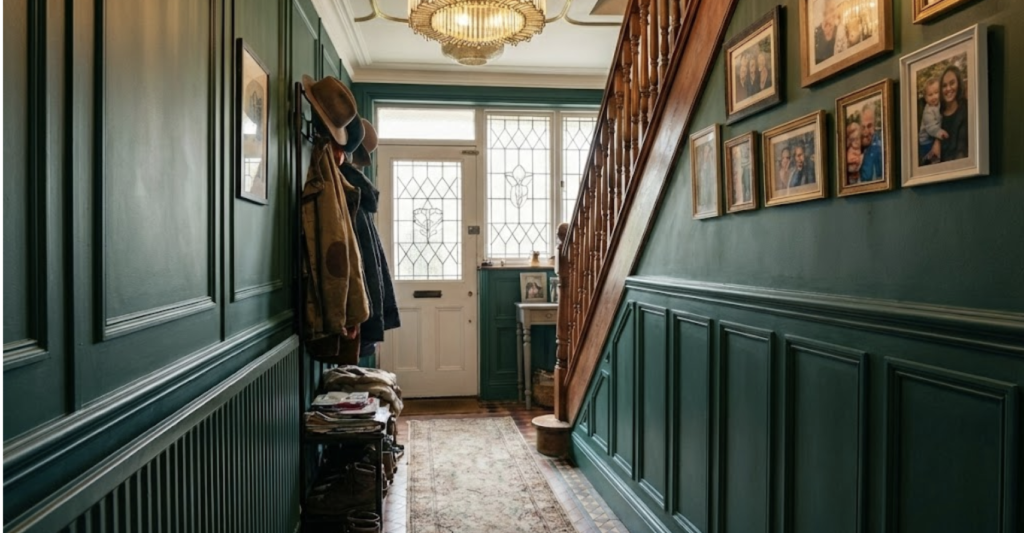
If you have ever stood in the middle of a drafty Victorian terrace or a grand Georgian townhouse and wondered how to make it feel “current” without ripping out its soul, you are not alone. There is a specific kind of pressure that comes with owning a period property in the UK. You want the comfort and style of 2026, but you also feel like a temporary custodian of a piece of British history. You do not want to be the person who “modernized” a house by stripping away all the character and replacing it with grey laminate.
One of the most effective ways to bridge the gap between historic charm and modern luxury is through bespoke wall panelling. When done correctly, panelling adds depth, acoustic insulation (great for those thin Victorian walls), and a sense of architectural intent. When done poorly, it looks like a cheap DIY kit from a hardware store that has been stuck onto a wall as an afterthought.
At BH Bespoak, we spend a lot of time thinking about the “rules” of classical architecture so that we can break them just enough to feel modern. Here is your ultimate guide to adding panelling that respects the past while looking firmly toward the future.
Understanding the DNA of Your Home
Before you pick up a saw or a sketchbook, you need to know which “era” you are playing with. Victorian and Georgian houses have very different personalities, and their panelling should reflect that.
The Georgian Aesthetic (1714 to 1830) Georgian design is all about symmetry, proportion, and the “Golden Ratio.” In a Georgian home, panelling was often used to create a sense of grand scale. It typically featured large, simple rectangles. The goal was harmony. If you have high ceilings and large sash windows, you are likely in a Georgian-style space.
The Victorian Aesthetic (1837 to 1901) The Victorians were a bit more “extra.” They loved detail, texture, and showing off. Victorian panelling is often more intricate, featuring heavier mouldings, beading, and the famous “dado rail” which was originally designed to stop the backs of chairs from scuffing the expensive wallpaper.
The Secret of the Three-Part Wall
In classical architecture, a wall is treated like a Greek column. It has a base (the plinth), a middle (the shaft), and a top (the capital). Traditional panelling usually follows this logic:
- The Skirting: The sturdy base.
- The Dado: The lower section of panelling (usually about 90cm to 1m high).
- The Main Wall: Often left for paint or wallpaper.
- The Picture Rail or Cornice: The “cap” at the top.
If you want to modernise this, you can play with these proportions. For example, taking the panelling up to two-thirds of the wall height is a very “2026” move. It creates a dramatic, cocooning effect that feels incredibly cosy in a bedroom or a snug.
Choosing Your Style: From Shaker to Raised Panels
The “style” of the panel is where the modernisation really happens.
1. The Classic Shaker Panel. This is the “Little Black Dress” of the joinery world. It features a simple, flat recessed centre and straight edges. It works in almost any property. To make it feel modern in a period house, we often skip the traditional beading and keep the lines crisp and sharp.
2. The Raised Fielded Panel This is the grander, more “stately home” option. The centre of the panel is raised and often features decorative sloping edges. In a Georgian dining room, this looks spectacular. To modernise it, try painting it in a contemporary matte finish like a deep plum or a charcoal navy rather than the traditional cream or white.
3. Tongue and Groove (Beadboard) This consists of vertical wooden planks. It is a bit more “cottage” or “utility” in feel. In a Victorian home, this is perfect for hallways, boot rooms, or bathrooms. It respects the “working class” history of certain parts of the house while providing a clean, vertical line that makes ceilings feel higher.
The Materials: Wood vs. MDF
In the old days, panelling was made from solid oak or pine. Today, we have more options. For a period property, we almost always recommend Moisture-Resistant (MR) MDF for any panelling that is going to be painted.
Why? Because solid wood moves. It breathes, expands, and contracts with the British weather. In a period house that might have slightly damp walls or fluctuating temperatures, solid wood panels can crack or warp over time. MR MDF is incredibly stable, and once it is professionally painted, it is indistinguishable from solid wood.
However, if you want the “natural wood” look (perhaps for a grand library or a home office), we use beautiful veneers or solid hardwoods like Oak or Walnut. This adds a level of warmth that paint simply cannot match.
Modernizing with Colour and Light
This is where you can have some fun. In the past, panelling was often dark wood or very pale neutrals. To make your period property feel modern, use colour to your advantage.
The Monochromatic Look Paint your skirting, your panelling, your wall above, and even your radiators in the exact same colour and finish. This “drenches” the room in colour. It highlights the shadows and textures of the panelling without making the room feel “bitsy” or cluttered.
The Integrated Lighting Move Bespoke joinery allows us to hide things. We can build “rebates” into the top of the panelling to hide LED strips. This creates a soft, architectural wash of light up the wall, highlighting the period features of the ceiling. It is a very high-end look that brings a 150-year-old room straight into the modern day.
Avoiding the “Theme Park” Trap
The biggest mistake people make when adding panelling is making it too perfect. If your Victorian walls are slightly wonky (and they will be), the panelling needs to be “scribed” to fit those wonks. If you use a pre-made kit that is perfectly straight, it will actually highlight how crooked your house is.
A professional joiner will ensure the panelling feels like it grew out of the walls. We look at the existing skirting boards and architraves (the frames around the doors) and make sure the new panelling “talks” to them. If your door frames are chunky and decorative, your panelling should be too. If everything is slim and elegant, keep the panelling refined.
The Practical Benefits (The Boring but Important Stuff)
Beyond looking gorgeous, panelling is actually very practical for period homes:
- Acoustics: Period houses often have high ceilings and hard floors, which can make them echoey. Panelling breaks up the flat surfaces and acts as a sound dampener.
- Protection: Hallways are high-traffic zones. Painted plaster gets scuffed and chipped easily. Painted wood panelling is much tougher and can be wiped down easily.
- Insulation: While it is not a replacement for proper wall insulation, adding a layer of wood or MDF to your walls does provide an extra thermal barrier against those cold British winters.
Summary: A Bridge Between Eras
Modernising a period property is not about erasing the past; it is about adding a new chapter to the story. Bespoke wall panelling is the perfect way to do this. It respects the architectural language of the Georgians and Victorians while allowing you to express your own modern style through colour, proportion, and finish.
Whether you want a grand, full-height library look or a subtle, half-height hallway protector, panelling adds a “finished” quality to a room that paint alone can never achieve. It makes a house feel like a home that has been cared for, invested in, and loved.