

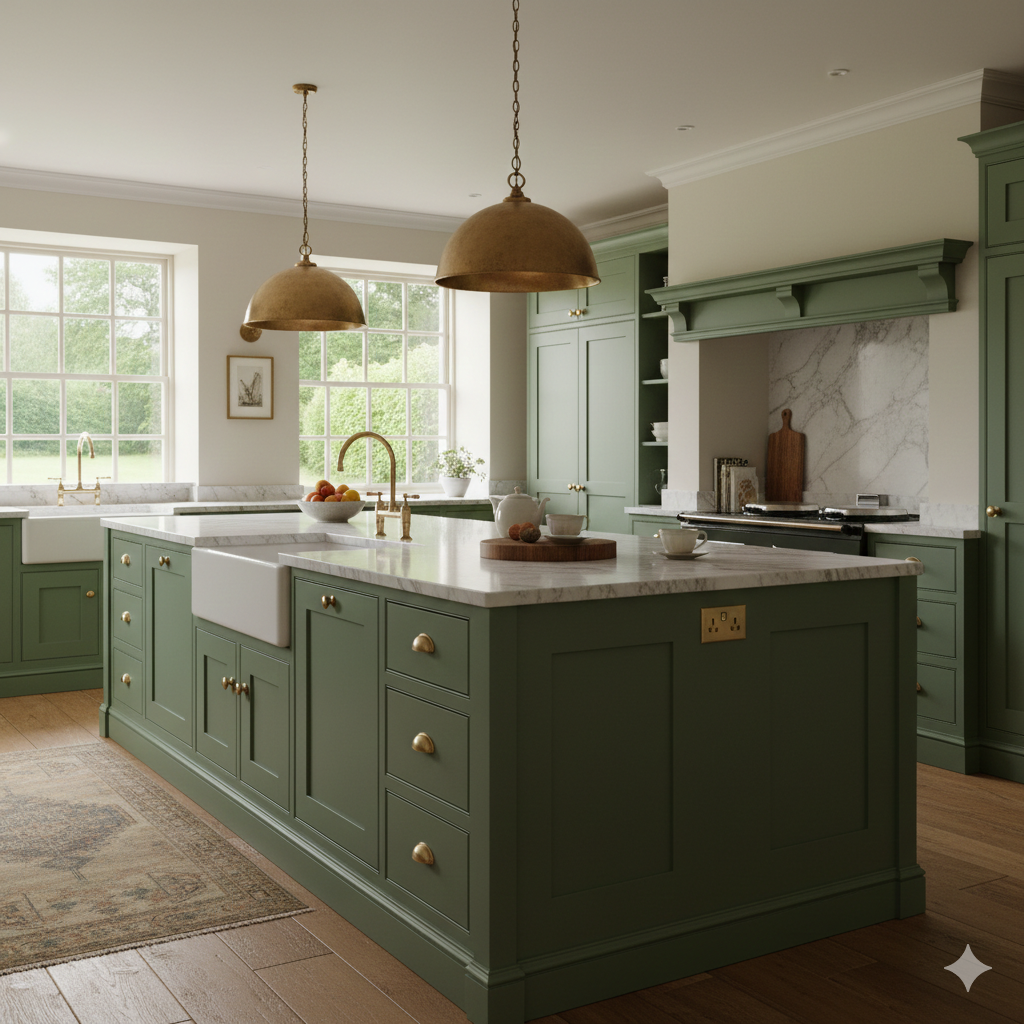
If you’ve spent any time scrolling through high-end interior design magazines or falling down a Pinterest rabbit hole of “dream English kitchens,” you’ve likely felt a certain je ne sais quoi emanating from some of them. They look solid, permanent, and inherently expensive. They don’t just look like furniture; they look like they were built into the very bones of the house.
Nine times out of ten, that “expensive” look is down to one specific joinery technique: the In-Frame kitchen.
In the UK, where we have a deep-seated love for heritage, craftsmanship, and things that don’t rattle when you close them, in-frame cabinetry is the undisputed gold standard. But what actually is it? And why is it worth more than a standard kitchen? Grab a cuppa, and let’s dive into the world of proper British joinery.
What Exactly Is an “In-Frame” Kitchen?
To understand the beauty of in-frame, you first have to understand the “lay-on” (or frameless) kitchen, which is what 90% of the modern world uses. In a standard lay-on kitchen, the door is attached directly to the side of the cabinet carcass. When the doors are closed, you see nothing but the doors themselves.
An In-Frame kitchen is different. It’s a traditional method where a wooden frame is meticulously crafted and fitted to the front of the cabinet box. The door then sits inside that frame. Think of it like a beautiful piece of art: a lay-on door is just the canvas tacked to the wall, while an in-frame door is the canvas perfectly nestled within a handcrafted oak frame.
1. The “Tank-Like” Durability
Let’s be honest: the kitchen is the engine room of the home. It survives slamming doors, spilled red wine, runaway toddlers, and the occasional “enthusiastic” Sunday roast prep.
The primary benefit of an in-frame design is structural integrity. Because the door is housed within a rigid wooden frame, it is far less likely to sag over time. In a standard kitchen, the hinges are screwed directly into the chipboard or MDF carcass. Over five or ten years, those screws can loosen, leading to “wonky door syndrome.”
With in-frame joinery, the hinges are usually fixed into solid timber. It’s the difference between hanging a heavy gate on a plastic post versus a solid oak one. It’s built to last a lifetime, not just a mortgage cycle.
2. The Aesthetic of “Quiet Luxury”
There is a visual weight to an in-frame kitchen that you simply cannot replicate with flat-pack alternatives. The extra lines created by the frame add depth and shadow, giving the kitchen a furniture-like quality.
In the UK, we often live in period properties—Victorian terraces, Georgian townhouses, or converted barns. A sleek, ultra-modern Italian gloss kitchen can sometimes feel like a UFO has landed in a cottage. In-frame cabinetry, however, bridges the gap between heritage and modern living. It feels architectural. It’s “quiet luxury” before the term even became a TikTok trend.
3. The Joy of the “Butt Hinge”
If you’re a fan of the finer details, you’ll appreciate the butt hinge. While modern kitchens use concealed “clip-on” hinges, traditional in-frame kitchens often use visible butt hinges, usually finished in brass, chrome, or blackened steel.
There is something immensely satisfying about the mechanical “click” and the smooth swing of a door on a proper hinge. It’s a tactile reminder every time you reach for the coffee that your kitchen was built by a person, not a robot.
4. It’s Practically Future-Proof
We’ve all seen them: the kitchens that were “so 2005” by 2012. Trends move fast, but the classic Shaker-style in-frame kitchen is effectively immune to the passage of time.
But here’s the real secret: In-frame kitchens are incredibly easy to refurbish. Because they are almost always made from solid wood or high-quality moisture-resistant (MR) MDF and then hand-painted, you can change the entire look of your home in a weekend with a tin of paint and some new handles.
- 2026: Navy Blue with Brass handles.
- 2036: Sage Green with Oak knobs.
- 2046: Whatever futuristic “Space Terracotta” is trending then.
The bones of the kitchen stay the same; the skin just evolves. You can’t easily do that with a vinyl-wrapped lay-on door.
5. No More “Wonky Doors”
We touched on this, but it deserves its own section because it’s the #1 gripe of kitchen owners. Because the door sits inside a frame, the frame acts as a physical stop. The door can’t be “pushed in” too far, and it stays perfectly square. It’s precision engineering disguised as traditional carpentry.
Is an In-Frame Kitchen Right for You?
While we clearly love them, we’re all about candor here at BH Bespoak. There are a couple of things to consider:
- The Investment: Because they require more material and significantly more hours of skilled labor (fitting a door inside a frame with a perfect 2mm gap all the way around is an art form), they do cost more than lay-on kitchens.
- Storage Space: Because there is a frame around the opening, you technically lose a few centimeters of “entry space” into the cabinet. If you have a truly tiny kitchen where every millimeter counts, this is worth chatting about with your joiner.
The Verdict
In a world of “fast furniture” and disposable interiors, the in-frame kitchen stands as a rebel. It’s a nod to the Victorian craftsmen who built things to outlast their owners. It’s for the UK homeowner who wants their kitchen to feel like a permanent part of the architecture—a place for family meetings, messy baking sessions, and late-night wine-fueled chats for decades to come.
It isn’t just a kitchen; it’s a piece of heritage joinery.