

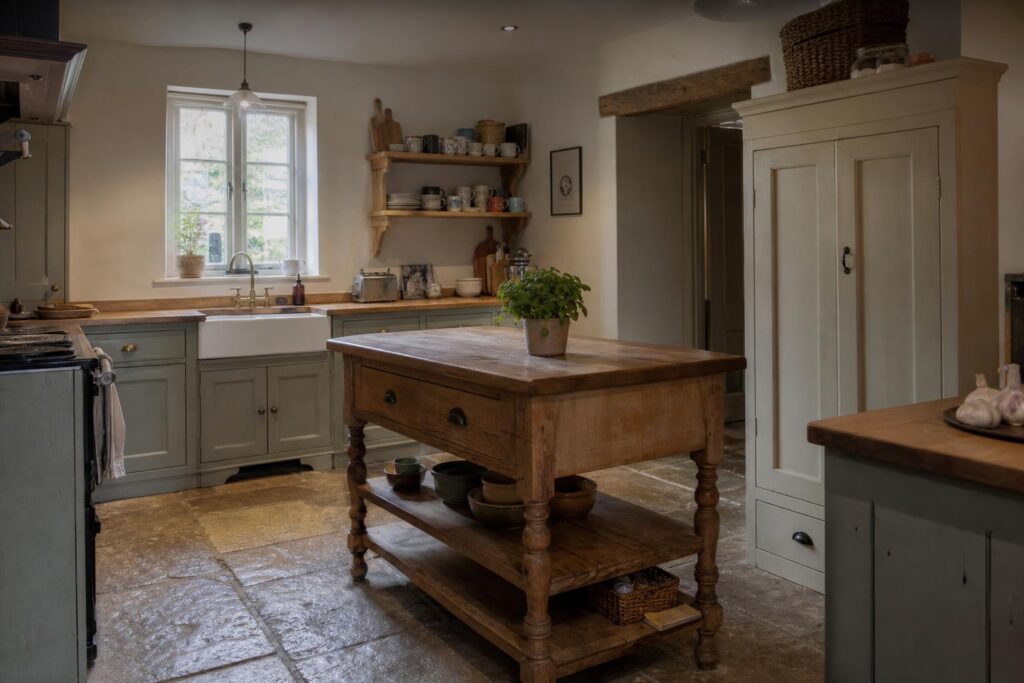
Unfitted kitchens are having a proper moment in 2026, and in our experience it is easy to see why. After years of kitchens being designed as one long run of identical units, more homeowners are asking for rooms that feel built, collected and fitted to the house, not dropped in from a catalogue.
That does not mean a kitchen full of random furniture or awkward gaps. Done well, an unfitted kitchen still works hard. It gives you storage, worktop space, appliance housing and a good flow around the room. The difference is that the joinery is allowed to breathe a bit. You might have a solid worktable instead of a chunky island, a freestanding larder cupboard, a dresser for crockery, or a painted sink cabinet that looks like it belongs in an older house.
Honest truth is, this trend suits British homes especially well. Plenty of houses here were not built around big square kitchen extensions. They have alcoves, chimney breasts, low ceilings, uneven walls, back doors in awkward places and all the quirks that make a standard kitchen layout feel forced. Bespoke joinery is where those quirks can become useful.
Why unfitted kitchens are back in 2026
The biggest reason unfitted kitchens are back is that people are tired of rooms that look finished on day one but feel flat after six months. A fully matched kitchen can be neat, but it can also feel a bit lifeless if every door, panel, plinth and end cheek is doing the same thing.
Furniture-style joinery adds variation. A larder cupboard can stand proud. A dresser can have glazed doors or open shelves. A worktable can bring timber into the middle of the room without the bulk of a fitted island. A run of base units can be painted one colour while the tall storage is made in oak or a warmer timber.
It also fits with the wider move towards kitchens that feel more lived-in. We are seeing more interest in natural timber, warm paint colours, aged brass, stone, linen curtains inside cupboards, proper pantry storage and less shiny perfection. People still want a kitchen that works, of course. They just do not want it to feel like a display stand.
Where furniture-style joinery works best
An unfitted look works especially well when you use it in the right places. The trick is knowing which parts of the kitchen need to be fixed and practical, and which parts can feel more like furniture.
- Larder cupboards: A full-height freestanding larder can give you serious storage without making the whole room feel boxed in.
- Worktables: A timber worktable gives you prep space and a place to gather, but it feels lighter than a fully fitted island.
- Dressers: A dresser is brilliant for crockery, glassware and serving pieces, especially in kitchens that open onto a dining area.
- Sink cabinets: A well-made sink cabinet can look more settled and traditional than a run of standard base units.
- Awkward alcoves: Bespoke joinery can turn odd corners into useful storage instead of pretending the walls are straight.
We would still usually keep appliances properly integrated where it makes sense. Dishwashers, fridges, ovens and bins need good clearances, ventilation and access. This is where a good joiner earns their keep. The kitchen can look relaxed, but the bones underneath have to be right.
Unfitted kitchens still need proper planning
This is the part that gets missed in the glossy pictures. An unfitted kitchen should not mean under-designed. If anything, it needs more thought than a standard run of cabinets because every piece has to earn its place.
Before anything is built, it is worth looking carefully at how you use the kitchen. Where do you unload the food shop? Where does the kettle live? Do you bake, batch cook, entertain, or mostly need quick weekday meals? Where do the bins go? Where does the vacuum end up when nobody knows where to put it? These everyday details matter more than the colour of the doors.
Clearances are another big one. A worktable needs enough room around it. A tall larder door should open properly without blocking the main route through the kitchen. Drawers need to pull out without clashing with handles opposite. It sounds basic, but we have seen this go wrong plenty of times.
Materials make or break the look
With furniture-style joinery, materials matter. A cheap carcass with a nice handle still feels cheap. Solid timber, good quality birch ply, proper hinges, well-made drawers and carefully finished edges all make a difference because the pieces are more exposed.
Painted joinery works well for this style because it can be repaired, refreshed and adjusted over time. Timber is also a strong choice, especially oak, ash or walnut used in the right amount. Too much timber can feel heavy, but the right piece in the right place gives the room warmth and depth.
Worktops need the same common sense. Stone, timber and quality composites can all work, but the best option depends on how you live. If you are hard on surfaces, say so at the start. A good joiner will tell you what will cope and what will annoy you later.
When an unfitted kitchen is not the right answer
There are times when a more fitted approach is better. Small kitchens often need every millimetre working hard, especially if storage is tight. Very modern extensions can sometimes suit clean built-in lines. Busy family homes may need big drawer runs, integrated bins and hidden appliances more than a freestanding look.
That said, it does not have to be all or nothing. Some of the best kitchens mix the two. You might have a practical fitted cooking wall, then a freestanding larder and a timber worktable. Or you might keep the base run simple and add a bespoke dresser where the kitchen meets the dining space.
Worth getting right the first time, because this style only works when it looks intentional. One freestanding piece can look beautiful. Five unrelated pieces shoved into a room can look like a storage problem.
The joinery details to ask about
If you are considering an unfitted kitchen, ask how each piece will be built, fixed and finished. Will the larder be genuinely freestanding or scribed to the wall? Will the worktable be moveable or fixed for safety? How will plumbing be handled in a sink cabinet? Can shelves take the weight of everyday crockery? Are the drawers built properly or just bought in as a cheap box?
These questions are not fussy. They are the difference between a kitchen that feels charming and one that becomes a nuisance. The whole point of bespoke joinery is that it can be made around your home and your habits.
A good unfitted kitchen feels settled, not unfinished
The best unfitted kitchens have a quiet confidence about them. They do not shout. They feel like the room has grown into place, with useful pieces in the right spots and enough character to avoid looking like everyone else’s kitchen.
In our view, that is why this trend has legs. It is not just about copying old country kitchens. It is about making modern kitchens warmer, more practical and better suited to real homes. If the joinery is well designed and properly made, it can give you the best of both worlds: everyday function and a room with a bit of soul.
Thinking about a new kitchen or a bespoke joinery piece for your home? Give BH Bespoak a call on 07904 794280 or message us on Facebook. We are always happy to talk through what would work in your space.