

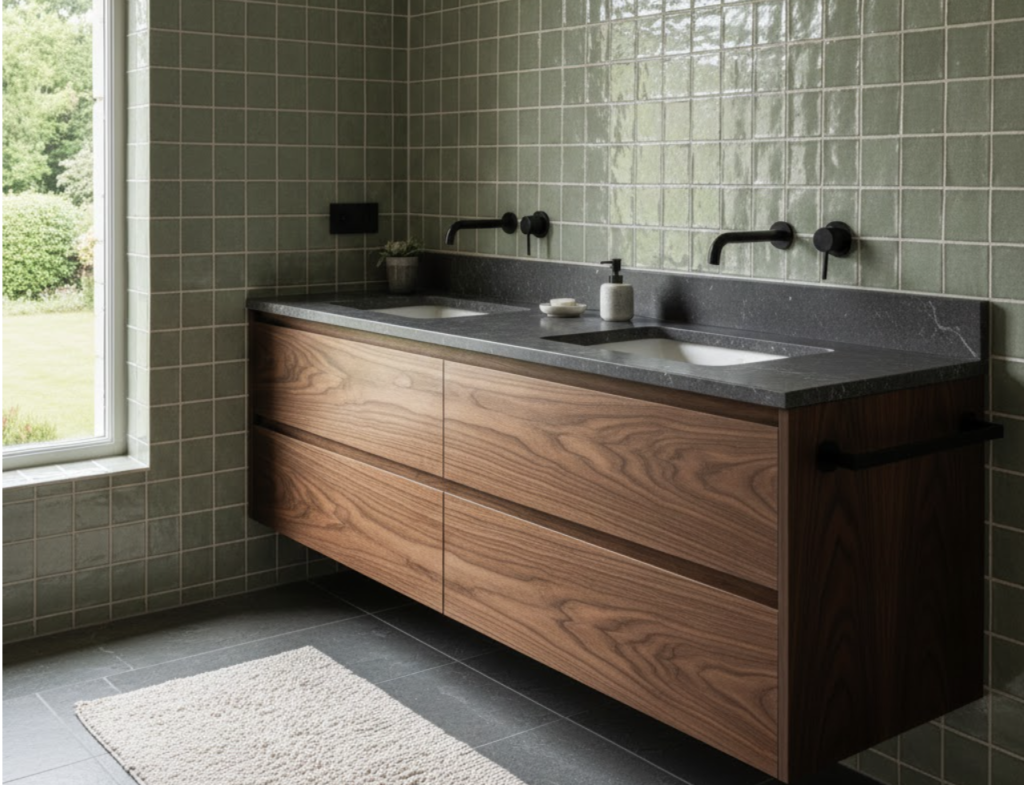
For decades, the “British Bathroom” has followed a very specific, almost clinical, set of rules. It usually involves a sea of white glossy tiles, a white porcelain pedestal sink, and perhaps a chrome towel rail if we are feeling particularly adventurous. While there is nothing inherently wrong with a clean, white suite, it can sometimes feel a little cold. It feels like a room designed for scrubbing, not for relaxing.
In 2026, the tide is turning. We are seeing a huge shift toward the “Spa-cation” aesthetic. Homeowners across the UK are ditching the hospital-grade brilliance of all-white rooms in favour of something much more grounded, tactile, and, frankly, expensive-looking.
The secret to this transformation? It is all about the vanity unit. By introducing dark wood and earthy tones through bespoke joinery, you can turn a functional “washroom” into a sanctuary that feels like a boutique hotel in the Cotswolds. Here is how to move beyond the white suite without losing that feeling of cleanliness and luxury.
The Psychology of Earthy Tones
There is a reason why high-end spas almost always use natural textures. White and chrome are “high-energy” colours; they reflect light and keep your brain alert. Dark woods (like walnut or stained oak) and earthy tones (terracotta, sage, sand, and charcoal) are “low-energy” colours. They absorb light and encourage your nervous system to dial things down a notch.
When you step into a bathroom with a bespoke walnut vanity unit, your brain immediately registers “warmth.” It creates a sense of enclosure and comfort. In a room where we are often at our most vulnerable (and usually quite chilly), that warmth is a game-changer.
Why Bespoke is Non-Negotiable in a Bathroom
You might be tempted to just buy a dark wood cabinet from a high-street retailer. However, bathrooms are notoriously difficult environments for wood. They are humid, they suffer from temperature swings, and they are prone to splashes of everything from toothpaste to beard oil.
1. Material Choice and Longevity Standard high-street furniture is often made from “wrapped” MDF. If moisture gets under that plastic wrap, the wood underneath swells like a sponge, and the whole thing is ruined. A bespoke joiner will use solid timber or high-grade moisture-resistant (MR) MDF with real wood veneers, finished with marine-grade lacquers. This ensures your dark wood stays dark and beautiful, not damp and peeling.
2. The Perfect Fit British bathrooms are rarely vast. We often have to navigate boxed-in pipes, awkward corners, or sloping eaves. A bespoke vanity allows you to maximise every millimetre. Want a double-width vanity that fits exactly between two walls? Or a floating unit that makes a small floor look bigger? That is where joinery shines.
Selecting Your “Beyond White” Palette
If you are ready to make the leap, here are three ways to incorporate dark wood and earthy tones into your next renovation:
1. The Walnut and Charcoal Combination
This is the pinnacle of masculine, modern luxury. Dark walnut has a rich, varied grain that looks incredible when paired with a charcoal grey stone top.
- The Joinery Tip: Ask for a “book-matched” grain across the front of your drawers. This means the pattern of the wood flows seamlessly from one drawer to the next.
- The Earthy Finish: Pair this with matte black taps and slate-effect floor tiles to keep the vibe sophisticated.
2. Stained Oak and Sage Green
If you want something that feels a bit more “country house,” try a dark-stained oak. By staining oak a deep espresso colour, you keep that beautiful, rugged grain but lose the “90s office furniture” orange tones.
- The Earthy Finish: Set this against sage green wall tiles. Green and wood are nature’s favourite pairing; they never clash. It creates a “forest floor” aesthetic that is incredibly calming.
3. The Reclaimed Look with Terracotta
For a more rustic, Mediterranean feel (even if you are actually in a rainy suburb of Birmingham), look for textured, darker woods.
- The Joinery Tip: Slatted or fluted wood panels on the vanity doors add a tactile element that looks fantastic when the morning sun hits it.
- The Earthy Finish: Use terracotta-coloured grout or hand-finished clay tiles. The reddish-orange tones of the earth contrast beautifully with the deep browns of the wood.
The “Floating” vs. “Floor-Standing” Debate
When you are using darker materials, you have to be careful about “visual weight.” A massive, solid dark wood box that goes all the way to the floor can sometimes make a small bathroom feel a bit cramped.
- The Floating Vanity: By mounting a bespoke dark wood vanity to the wall and leaving the floor underneath clear, you create an illusion of space. You get all the warmth of the wood, but the room still feels light and airy.
- The Floor-Standing Unit: This is best for larger bathrooms or if you absolutely must have maximum storage. To keep it from looking too heavy, ask your joiner for “recessed plinths” or elegant legs to give the piece a furniture-like quality rather than looking like a kitchen cabinet that got lost.
Topping It Off: The Countertop
A bespoke wood vanity is only half the story. To really sell the “earthy” look, you need the right top.
Avoid high-gloss white quartz if you can. Instead, look for “honed” or “leathered” finishes. These are matte and have a slight texture to the touch.
- Concrete: Gives a raw, industrial, earthy edge.
- Limestone: Provides a soft, sandy texture that feels amazing underhand.
- Dark Marble: For that classic, old-world luxury.
Maintenance: The Fun Part (Really!)
People are often scared of wood in bathrooms, but there is no need to be. Modern finishes are incredibly tough. The “maintenance” usually involves nothing more than wiping it down after a splashy bath.
The best part? Unlike a white plastic vanity that will eventually yellow and crack, wood ages with grace. If you get a little scratch in five years, it can be sanded and refinished. It is a piece of furniture that lives with you.
Summary: Ground Your Sanctuary
Moving away from the “all-white” look is about more than just being trendy. It is about creating a home that feels connected to the natural world. By choosing a bespoke vanity in a rich wood or a deep, earthy hue, you are telling the world (and yourself) that your bathroom is a place of rest, not just a place for chores.
It is time to be bold. Ditch the clinical white, embrace the grain, and build a bathroom that actually makes you want to stay in the bath until the water goes cold.