

For decades, the concept of luxury in interior design was loud. It was defined by flashy branding, ostentatious gold fixtures, high-gloss finishes, and heavily ornamented details that demanded your attention the moment you walked into a room. But as we navigate 2026, the paradigm has shifted entirely. Today, true luxury whispers; it does not shout.
Welcome to the era of ‘Quiet Luxury’, often referred to in fashion and interiors as ‘stealth wealth’. This movement is about stripping away the superficial and focusing entirely on the inherent quality of the materials, the flawlessness of the craftsmanship, and the emotional resonance of a space.
Nowhere is this shift more impactful than in the bathroom. No longer just a utilitarian space for a hurried morning routine, the modern UK bathroom has evolved into a personal sanctuary. We are seeking the serene, restorative aesthetic of a high-end wellness spa within our own homes. To achieve this calm, elevated atmosphere, designers and homeowners are turning their backs on mass-produced, off-the-shelf furniture and investing heavily in the room’s most crucial focal point: the bespoke vanity unit.
Here is how you can achieve the ultimate spa aesthetic by embracing the principles of quiet luxury and bespoke joinery in your bathroom.
Defining ‘Quiet Luxury’ in Bathroom Design
At its core, quiet luxury is about intentionality. It is the understanding that a space feels expensive not because of a designer logo, but because every single element has been carefully considered and beautifully executed.
In a bathroom, this translates to a minimalist—but never cold—approach. It is the absence of visual clutter. It is the reliance on a subdued, earthy colour palette. Most importantly, it is the celebration of tactile, authentic materials over clever imitations. A quiet luxury bathroom shuns plastic laminates designed to look like wood, opting instead for authentic solid timber. It rejects shiny, easily scratched acrylic basins in favour of matte, stone-like solid surfaces.
This aesthetic requires immense restraint. When you remove busy patterns and flashy hardware, there is nothing left to hide behind. The beauty must come entirely from the craftsmanship of the joinery and the purity of the materials.
The Centrepiece of the Sanctuary: Why Bespoke Matters
If you want to create a spa-like environment, standard bathroom furniture simply will not suffice. UK bathrooms are notoriously idiosyncratic—they often feature awkward alcoves, sloping ceilings, uneven walls, and complex plumbing runs. Forcing a standard, blocky MDF vanity into these spaces often results in dead, unused gaps, ugly filler panels, and a disjointed look that immediately shatters the illusion of a bespoke, high-end sanctuary.
A custom bathroom vanity, on the other hand, is architectural joinery. It is designed from the ground up to fit your exact space perfectly, flowing seamlessly from wall to wall.
Beyond the perfect fit, bespoke joinery addresses the unique environmental challenges of a bathroom. Off-the-shelf units are frequently constructed from cheap chipboard or low-grade MDF, which can swell, warp, and peel after just a few years of exposure to steam and damp towels. A bespoke joiner will select premium, moisture-resistant core materials, wrapping them in high-quality real wood veneers or solid timbers, and sealing them with advanced, low-VOC waterproof lacquers. This ensures that your vanity not only looks exquisite on day one, but continues to perform flawlessly for decades.
Embracing Natural Timber for Warmth and Wellbeing
A clinical, all-white bathroom can feel stark and uninviting. To capture the essence of a luxury spa, you must introduce warmth, texture, and a connection to the natural world—a concept known as biophilic design. Timber is the perfect vehicle for this.
The Resurgence of Rich Walnut
In 2026, rich, dark woods are dominating high-end interiors, and American Black Walnut is the undisputed king of the quiet luxury bathroom. Walnut offers a deeply sophisticated, moody elegance. Its swirling, complex grain patterns provide a natural artwork that requires no further embellishment. A bespoke, wall-hung walnut vanity instantly grounds a bright bathroom, creating a striking yet understated contrast against neutral tiles.
The Timelessness of Oak
For those who prefer a lighter, more Scandinavian-inspired spa aesthetic, oak remains a timeless choice. However, the application has evolved. Rather than the heavy, traditional oak cabinets of the past, contemporary bespoke vanities utilise European oak with subtle, white-washed, or raw-look matte finishes that preserve the tactile feel of the wood grain.
Tactile Finishes: Moving Beyond the Flat Panel
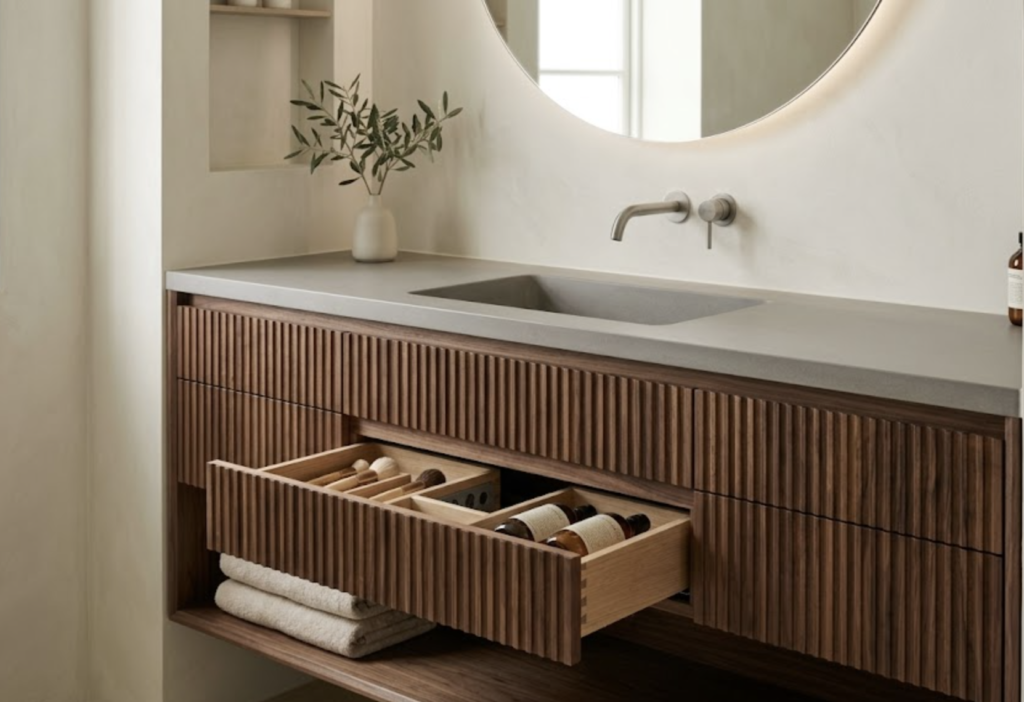
While flat, slab-style doors are wonderfully minimalist, quiet luxury often relies on subtle texture to create interest. Bespoke joinery allows you to explore tactile profiles. Gently slatted wood, scalloped fronts, and heavily wire-brushed grains add an incredible layer of sensory depth to the vanity, encouraging you to reach out and touch the cabinetry.
The Solid Surface Revolution: Seamless and Serene
The vanity base is only half the story; the worktop and basin are where you physically interact with the unit every single day. If quiet luxury is about uninterrupted lines and premium materials, then solid surface is the ultimate choice for your vanity top.
Materials like Corian, Hi-Macs, and other premium acrylic-mineral blends have revolutionised bespoke bathroom design. Unlike ceramic or stone, which require the basin to be under-mounted or dropped in (leaving a visible seam and a ring of silicone sealant that inevitably discolours), solid surface materials can be thermoformed.
This means your master joiner and fabricator can create a vanity top where the basin is seamlessly integrated into the worktop. The material flows continuously from the flat counter down into the bowl without a single joint, crease, or crevice.
- The Matte Advantage: While standard ceramics are highly glossy and reflective, solid surfaces can be polished to a beautiful, velvety matte finish. This diffuses the bathroom lighting softly, contributing to the serene, anti-bling spa atmosphere.
- Hygienic and Restorative: Because solid surfaces are completely non-porous and lack the seams where dirt and bacteria normally hide, they are incredibly easy to keep pristine. The psychological comfort of a genuinely clean, seamless surface is a subtle but vital component of the spa experience.
Craftsmanship You Can Feel: The Unseen Details
In the world of stealth wealth, luxury is just as much about how something feels to use as how it looks. The true value of a bespoke vanity unit reveals itself in the engineering and the unseen details.
When you open a drawer on a bespoke vanity, it should feel like closing the door of a luxury car. Master joiners utilise robust, heavy-duty drawer runners with flawless soft-close mechanisms. This ensures that even when a deep drawer is fully loaded with heavy glass bottles and cosmetics, it glides open effortlessly and glides shut in complete silence—preserving the tranquil acoustic environment of your bathroom.
The joinery itself is a testament to quality. Traditional dovetail joints in solid oak drawer boxes offer structural integrity that staples and glue simply cannot match. It is a hidden detail, a secret luxury that only you, the homeowner, get to appreciate every morning.
Hardware is also handled differently. To maintain the unbroken, minimalist lines of the cabinetry, designers are increasingly opting for handleless designs, utilizing precision-engineered “push-to-open” mechanisms or seamlessly routed finger-pulls recessed directly into the top edge of the wooden drawer fronts. If hardware is used, it is tactile and substantial—think knurled raw brass or brushed gunmetal that will naturally patina over time, rather than shiny, electroplated chrome.
Eradicating Visual Clutter with Intelligent Storage
You cannot relax in a spa if you are staring at a chaotic jumble of half-empty shampoo bottles, electric toothbrush chargers, and stray cotton wool pads. The enemy of the quiet luxury aesthetic is visual clutter.
A bespoke vanity is not just a beautiful piece of furniture; it is a highly engineered storage machine designed around your specific daily routine. Because the internal configuration is custom-built, you can eradicate countertop clutter entirely:
- Custom Drawer Dividers: Tailored specifically to the size of your cosmetics, skincare bottles, and grooming kits, ensuring everything has a precise, hidden home.
- Integrated Power: Shaver sockets and USB ports can be cleverly hidden inside the vanity drawers or mirrored wall cabinets. Your electric toothbrush and razor can stay plugged in and charging out of sight, leaving your beautiful solid surface worktop completely bare.
- Hidden Utility: For larger family bathrooms, the lower sections of a bespoke vanity can incorporate integrated, pull-out laundry baskets, keeping damp towels off the floor and out of mind.
Investing in Your Daily Wellbeing
The shift towards ‘Quiet Luxury’ in the UK home is not a fleeting trend; it is a fundamental re-evaluation of what we value in our living spaces. We are moving away from disposable, mass-produced items and returning to an appreciation for longevity, authenticity, and masterful craftsmanship.
Your bathroom is the first room you visit in the morning and the last room you use before bed. It sets the tone for your entire day. By investing in a bespoke, handcrafted vanity unit—characterised by the warmth of natural wood, the seamless elegance of solid surface basins, and the silent, flawless operation of custom joinery—you are doing more than just renovating a room. You are creating a personal, restorative spa that will elevate your daily routine for decades to come.
If you are ready to bring the unmatched quality of quiet luxury into your home, it starts with a conversation about bespoke design. True luxury doesn’t shout for attention, but its quality speaks for itself.