

In our hyper-connected, fast-paced modern world, the role of the home has fundamentally shifted. It is no longer just a place to sleep and store our belongings; it is our primary sanctuary. As we navigate the demands of 2026, there is a growing, collective desire to create domestic spaces that actively support our mental and physical health.
This pursuit of domestic tranquillity has led interior designers and architects back to a fundamental human truth: we feel better when we are connected to nature.
This concept, known as biophilic design, is the practice of incorporating natural elements into the built environment. While house plants and ample natural light are wonderful starting points, one of the most profound ways to introduce biophilic principles into a UK home is through the materials we build it with.
Moving away from the cold, clinical, high-gloss plastics and synthetic laminates of the past, homeowners are rediscovering the incredible psychological benefits of natural wood joinery. Nowhere is this more impactful than in the two rooms we use the most intensely: the kitchen and the bathroom.
Here is a deep dive into how bespoke, natural wood joinery—specifically utilizing oak, ash, and walnut—can significantly improve your wellbeing at home.
The Science of Biophilia: Why Wood Makes Us Feel Good
The calming effect of a walk in the woods is not just anecdotal; it is a biological response hardwired into our DNA. For 99% of human history, we lived outdoors, surrounded by organic shapes, natural textures, and earthy colours. Our brains are inherently designed to feel safe and relaxed in natural environments.
When we bring authentic, natural materials like solid timber into our homes, we trigger that same neurological response. Scientific studies into biophilic design have shown that visually and physically interacting with natural wood can:
- Lower cortisol levels: Reducing the physical markers of stress.
- Decrease heart rate and blood pressure: Promoting a state of physical calm.
- Improve cognitive function and focus: Essential for those who operate hybrid working models from home.
- Elevate mood and emotional wellbeing: Creating a space that feels nurturing rather than merely functional.
Crucially, our brains are incredibly adept at spotting a fake. While printed vinyl laminates or melamine might look like wood from a distance, they do not offer the same psychological benefits. The subconscious mind registers the repetitive, printed pattern and the cold, plastic feel, breaking the illusion. To truly harvest the wellness benefits of biophilic design, the materials must be authentic. This is where bespoke, solid wood joinery becomes an investment in your daily health.
The Heart of the Home: Warming Up the Modern Kitchen
For decades, the standard UK kitchen was designed with a focus on sterile efficiency. We saw seas of white gloss cabinets, cold stone worktops, and harsh, reflective surfaces. While easy to wipe down, these environments can feel clinical, noisy, and stressful—not ideal for the room that serves as the heart of family life.
Introducing bespoke natural wood joinery softens the acoustics of the room, diffuses harsh lighting, and immediately grounds the space.
The Grounding Power of Oak
European Oak is the cornerstone of traditional and contemporary British joinery, and for good reason. Psychologically, oak represents strength, endurance, and heritage.
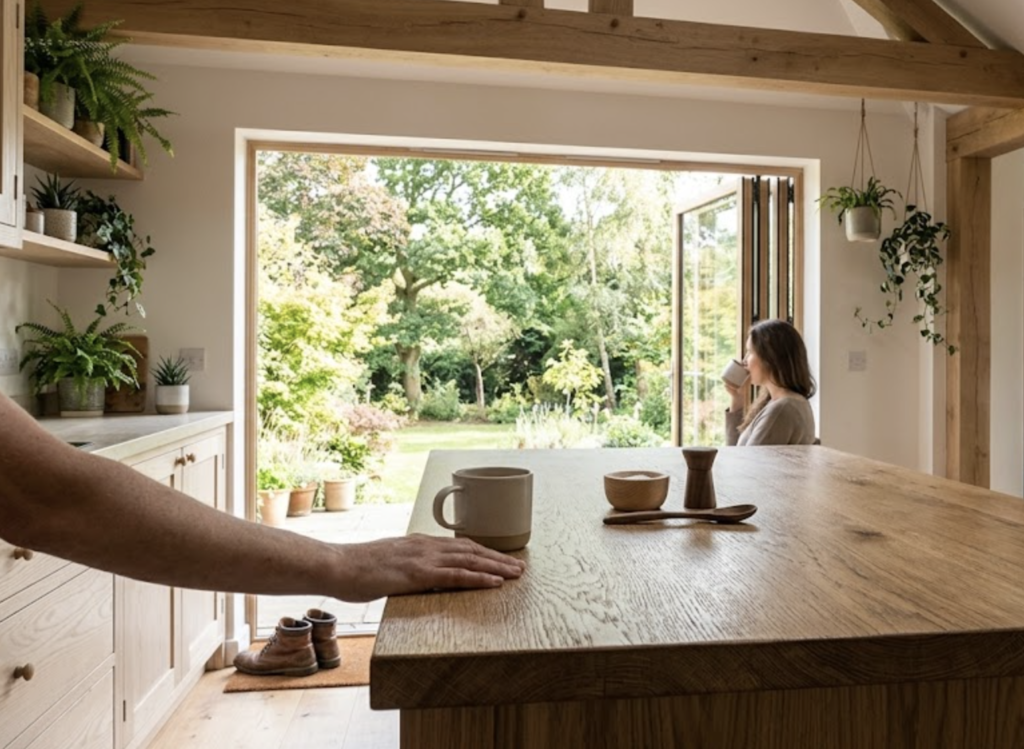
Incorporating bespoke oak cabinetry or a sweeping solid oak worktop into your kitchen brings an immense visual warmth. The golden, honeyed tones of natural oak instantly make a large kitchen feel more inviting and less cavernous. When you sit down for a morning coffee at a bespoke oak kitchen island, the natural variations in the grain, the medullary rays, and the warm, tactile surface provide a moment of grounded mindfulness before the rush of the day begins.
Because oak is so robust, it wears its history beautifully. Over the years, minor dings and the deepening patina of the wood tell the story of your family, creating an emotional connection to your home that flat-pack, mass-produced cabinets simply cannot foster.
The Uplifting Serenity of Ash
If your kitchen is on the smaller side, or if it lacks abundant natural daylight—a common issue in traditional Victorian terraces or older period properties—heavy, dark woods might feel oppressive.
Ash is the perfect biophilic antidote. Featuring a much paler, almost creamy complexion with a distinct, sweeping grain pattern, ash joinery is inherently uplifting. It reflects light beautifully without the harsh glare of a painted gloss finish.
Using ash for bespoke kitchen cupboards, open shelving, or even built-in banquette seating creates a Scandi-inspired, airy aesthetic. Psychologically, light woods like ash promote feelings of spaciousness, clarity, and optimism. It is the architectural equivalent of a deep breath of fresh, crisp air.
The Personal Sanctuary: Transforming the Bathroom
The bathroom is where we begin and end our days. It is the room where we transition from sleep to waking, and where we wash away the stress of the day before returning to bed. Therefore, the psychological impact of bathroom design is immense.
To create a truly restorative, spa-like environment, we must eliminate the cold, echoey feeling of wall-to-wall porcelain and introduce the soothing presence of natural timber through bespoke vanities and integrated storage.
The Cocooning Luxury of Walnut
When the goal is absolute relaxation and ‘quiet luxury’, American Black Walnut is the ultimate timber choice. Walnut is characterised by its deep, rich, chocolate-brown tones and complex, swirling grain patterns.
Psychologically, dark, warm woods create a sense of enclosure and safety. They are “cocooning.” A bespoke, wall-hung walnut vanity unit in a bathroom acts as a visual anchor. Against a backdrop of neutral, matte tiles, the rich timber draws the eye and immediately lowers the emotional temperature of the room.
Imagine running a hot bath in the evening. The soft ambient lighting catches the natural lustre of the walnut grain, creating a moody, sophisticated sanctuary that feels miles away from the glaring fluorescent lights of the typical family bathroom. It is a daily luxury that actively promotes nighttime relaxation.
Combating Bathroom Humidity with Bespoke Craftsmanship
A common misconception is that natural wood does not belong in a damp bathroom. While a cheap, off-the-shelf MDF unit will undoubtedly swell and blow when exposed to moisture, bespoke architectural joinery is engineered to thrive.
Master joiners select premium, moisture-resistant core materials, wrapping them in thick, authentic wood veneers or using solid timbers treated with advanced, breathable, low-VOC (Volatile Organic Compound) oils and lacquers. This not only protects the wood but ensures your indoor air quality remains pristine—another crucial aspect of home wellbeing.
Beyond the Visual: The Importance of Tactility
The benefits of natural wood joinery extend far beyond how it looks; it is also about how it feels. In our daily lives, we are constantly touching cold, hard, artificial surfaces—glass smartphone screens, plastic keyboards, metal car doors.
We suffer from a lack of “haptic” (touch) engagement with the natural world.
Think about how many times a day you open a kitchen cupboard or pull out a bathroom drawer. If you are touching a cold, flat melamine door, the sensory experience is entirely unfulfilling.
Bespoke joinery allows you to celebrate the tactile nature of wood.
- Wire-Brushed Finishes: A joiner can wire-brush solid oak doors, removing the softer summer wood to leave the raised, hard winter grain behind. This creates a deeply textured surface that your fingers will naturally want to trace.
- Tactile Profiles: The current trend for fluted, scalloped, or slatted wood panels on media walls, kitchen islands, and vanity units provides incredible sensory feedback.
- Handleless Designs: By opting for push-to-open mechanisms or seamlessly routed J-grooves integrated into the top edge of the timber drawer, your hand makes direct contact with the natural wood every single time you use the unit.
This daily, repeated physical contact with a natural material has a subtle but compounding grounding effect, briefly connecting you to nature even when you are rushing to get ready for work.
Sustainability and Peace of Mind
True wellbeing encompasses not just our immediate physical surroundings, but our peace of mind regarding the wider world. In 2026, eco-anxiety is a genuine concern for many homeowners. Creating a beautiful home should not come at the cost of the environment.
When you commission bespoke joinery crafted from natural wood, you are making a highly sustainable choice. Responsible joiners utilize FSC-certified timbers, ensuring the wood is sourced from responsibly managed forests where trees are replanted, and biodiversity is protected.
Furthermore, solid wood joinery represents a rejection of the “throwaway” furniture culture. A bespoke oak kitchen or a custom walnut vanity is built to last a lifetime. If it gets scratched or dented after twenty years of heavy family use, it does not go to a landfill; it gets sanded down, re-oiled, and brought back to its original glory.
Knowing that your home is furnished with sustainable, repairable, and ethically sourced materials provides a profound psychological comfort.
Elevate Your Everyday Experience
Bringing the outdoors in is about much more than putting a potted fern in the corner of the room. It is about fundamentally altering the sensory landscape of your home.
By replacing cold, synthetic materials with the warm, tactile, and visually stunning properties of natural oak, ash, and walnut, you transform mere rooms into restorative habitats. Bespoke wood joinery is not just an aesthetic upgrade; it is an active investment in your daily wellbeing, ensuring that your home remains a true sanctuary for decades to come.