

When designing a luxury kitchen or a bespoke bathroom, the worktop is arguably the most critical decision you will make. It is the surface that dictates the visual weight of the room, and it is the area that endures the harshest daily wear and tear.
For the modern UK homeowner, however, a new priority has entered the design brief. We no longer just want our homes to look exquisite and function flawlessly; we want them to be environmentally responsible. We are increasingly aware of our carbon footprint and the impact of the materials we bring into our spaces.
Historically, achieving a high-end, luxury aesthetic meant compromising on eco-credentials. The most sought-after worktops—like heavily quarried natural granites or resin-heavy engineered quartz—often carry a significant environmental cost. Conversely, early “eco-friendly” options were often limited in their design appeal, feeling a bit too rustic or lacking the durability required for a busy family kitchen.
Today, that compromise is entirely a thing of the past. Welcome to the era of the next-generation worktop.
Driven by incredible advancements in material science and sustainable manufacturing, a new wave of recycled solid surfaces and eco-friendly compact laminates has arrived. These materials are heavily requested by high-end interior designers, offering unparalleled luxury aesthetics without a shred of environmental guilt.
Here is everything you need to know about the sustainable surfaces revolutionising bespoke kitchen and bathroom design.
The Problem with Traditional Worktops
To understand why next-gen materials are so vital, we must first look at the environmental drawbacks of the traditional options that have dominated the UK market for the last two decades.
- Natural Stone (Granite and Marble): While undeniably beautiful and natural, the process of extracting solid stone from the earth is incredibly energy-intensive. It requires heavy mining machinery, leaves permanent scars on the landscape, and involves shipping enormously heavy slabs across the globe, resulting in a massive carbon footprint.
- Engineered Quartz: Quartz has been the darling of the luxury kitchen world for years. However, it is an engineered product made by binding crushed stone with petroleum-based, synthetic resins. These resins are difficult to recycle, meaning that at the end of its life, a quartz worktop often ends up in a landfill.
- Standard Laminate: Traditional, budget-friendly laminate consists of a thin layer of plastic glued to a thick core of chipboard (MDF or particleboard). When exposed to water—especially around sinks or dishwasher seams—the chipboard swells, blowing the worktop and ruining the kitchen. Because it is a mixed material (plastic bonded to wood), it is notoriously difficult to recycle.
The modern bespoke kitchen demands a smarter, greener approach.
The Rise of Recycled Solid Surfaces
Solid surface worktops (often known by brand names like Corian or Hi-Macs) have been around for a while, celebrated for their seamless joints and ability to be thermoformed into incredible shapes. But the next generation of solid surfaces has undergone a massive eco-friendly evolution.
Manufacturers are now pioneering highly luxurious solid surfaces composed of up to 85% recycled materials.
How Are They Made?
These next-gen surfaces utilise post-consumer and post-industrial waste that would otherwise be destined for the landfill. This includes recycled glass, crushed mirrors, porcelain ceramics, and even reclaimed plastics. Crucially, instead of using traditional petroleum-based acrylics to bind these elements together, the most innovative brands are now using bio-resins derived from natural, renewable sources like corn or vegetable oils.
The Luxury Aesthetic
Do not let the word “recycled” fool you. These materials offer a spectacular, premium finish.
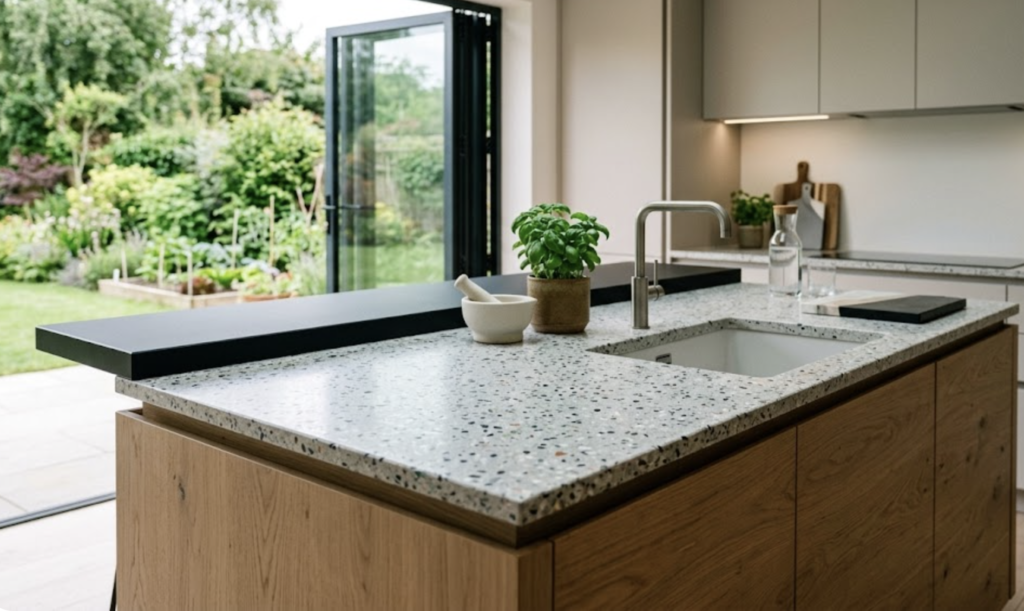
- The Terrazzo Revival: By suspending flecks of recycled glass and mirror within the bio-resin, manufacturers create stunning, deep terrazzo effects. These catch the light beautifully and add a layer of bespoke texture that looks far more expensive than standard quartz.
- Seamless Integration: Just like traditional solid surfaces, these eco-friendly variants can be joined inconspicuously. This means you can have a massive kitchen island with waterfall edges flowing flawlessly to the floor, without a single visible seam or silicone line. You can even specify a seamlessly integrated sink made from the exact same recycled material.
The Sustainability of Longevity
Perhaps the most eco-friendly aspect of a recycled solid surface is its lifespan. These worktops are completely non-porous, making them incredibly hygienic and resistant to wine, coffee, and lemon juice stains.
More importantly, they are renewable. If, after ten years of heavy family use, your worktop suffers a deep scratch, it does not need to be ripped out and thrown away. Because the material is solid all the way through, a professional fabricator can simply buff and polish the surface back to its original, factory-flawless finish. Buying a worktop that lasts a lifetime is the ultimate act of sustainable design.
Compact Laminate: The Eco-Conscious Minimalist’s Dream
If your aesthetic leans towards ultra-modern, sleek, and minimalist, then compact laminate is the next-gen material you need to know about.
Standard laminate has a bad reputation, but compact laminate is an entirely different beast. It is a highly engineered, self-supporting material that completely eliminates the problematic chipboard core.
How Is It Made?
Compact laminate is created by taking dozens of layers of high-quality FSC-certified Kraft paper (meaning the paper is sourced from responsibly managed, sustainable forests). These layers are soaked in eco-friendly resins and then baked under immense heat and extreme pressure.
The result is a solid, completely waterproof, and incredibly dense slab that is typically only 12mm thick.
The Architectural Aesthetic
The defining feature of compact laminate is its ultra-slim profile. In modern bespoke joinery, heavy, chunky 40mm worktops are making way for sleek, “floating” 12mm surfaces.
This thin profile looks incredibly sophisticated, particularly when paired with contemporary, handleless kitchen cabinetry. The core of the material is usually solid black, white, or colour-matched to the surface, creating a beautiful, crisp architectural line around the perimeter of your kitchen. The surface finishes are highly advanced, offering incredibly realistic, tactile reproductions of slate, concrete, rusted steel, or matte velvet-touch colours that resist fingerprints.
Supreme Practicality and Zero Waste
From an environmental and practical standpoint, compact laminate is a triumph:
- 100% Waterproof: Because there is no wood-particle core, compact laminate is completely impervious to water. This means, unlike standard laminate, you can finally have high-end undermount sinks and elegant, routed drainer grooves carved directly into the surface.
- Impact and Heat Resistant: The intense manufacturing process makes this material incredibly tough. It stands up to the rigours of a busy kitchen without chipping or cracking.
- Lighter Transport: Because it is so thin, it weighs significantly less than stone or quartz. This drastically reduces the carbon emissions associated with transporting the material from the factory to your home.
The Circular Economy of Kitchen Design
Investing in next-generation materials is a key component of joining the “circular economy.” Traditional kitchen design was linear: we extracted raw materials, made a product, used it, and eventually threw it in a skip.
The circular economy aims to design waste out of the system entirely. By choosing a recycled solid surface, you are actively removing waste from the environment and giving it a beautiful second life. By choosing FSC-certified compact laminate, you are supporting sustainable forestry and choosing a product with a remarkably long, waterproof lifespan.
The Low-VOC Advantage
Beyond the global environmental impact, next-gen worktops dramatically improve the environment inside your home. Older synthetic worktops and cheap MDF cabinets often “off-gas” Volatile Organic Compounds (VOCs) into your kitchen for years, which can impact your indoor air quality and wellbeing.
The premium eco-friendly worktops on the market today use advanced, non-toxic bio-resins and are certified as low or zero-VOC, ensuring the air your family breathes remains clean and safe.
Pairing Next-Gen Surfaces with Bespoke Joinery
The true magic of interior design happens through contrast. When you pair these cutting-edge, ultra-modern worktops with the timeless warmth of traditional bespoke joinery, the results are breathtaking.
At BH Bespoak, we believe that a truly sustainable kitchen is a complete ecosystem.
Imagine an ultra-thin, matte-black compact laminate worktop sitting atop a run of bespoke, solid European Oak cabinetry. The crisp, cold, architectural lines of the 12mm eco-worktop beautifully contrast with the warm, sweeping, tactile grain of the natural timber.
Alternatively, consider a sweeping kitchen island topped with a recycled, terrazzo-effect solid surface, paired with deep, moody, American Black Walnut joinery. The sustainable, bio-resin top provides a flawless, seamless area for preparing food and entertaining, while the FSC-certified walnut base anchors the room in natural biophilic beauty.
Because bespoke joinery is built from premium, solid materials designed to last a lifetime, pairing it with an equally durable, next-generation worktop ensures that your entire kitchen will serve your family for decades, completely negating the need for wasteful future renovations.
Luxury Without Compromise
Creating a beautiful home should not cost the earth. As we move deeper into a more environmentally conscious era, the materials we choose matter more than ever.
The arrival of recycled solid surfaces and eco-friendly compact laminates means that you no longer have to choose between luxury aesthetics, practical durability, and your environmental principles. You can have all three.
These next-generation worktops offer the sleek profiles, the seamless sink integrations, and the stunning textures demanded by high-end design, all while actively reducing landfill waste and lowering carbon footprints.
If you are planning a bespoke kitchen or bathroom renovation and want to explore how these incredible, sustainable materials can be integrated with masterful custom joinery, the future is already here, and it is beautifully green.