

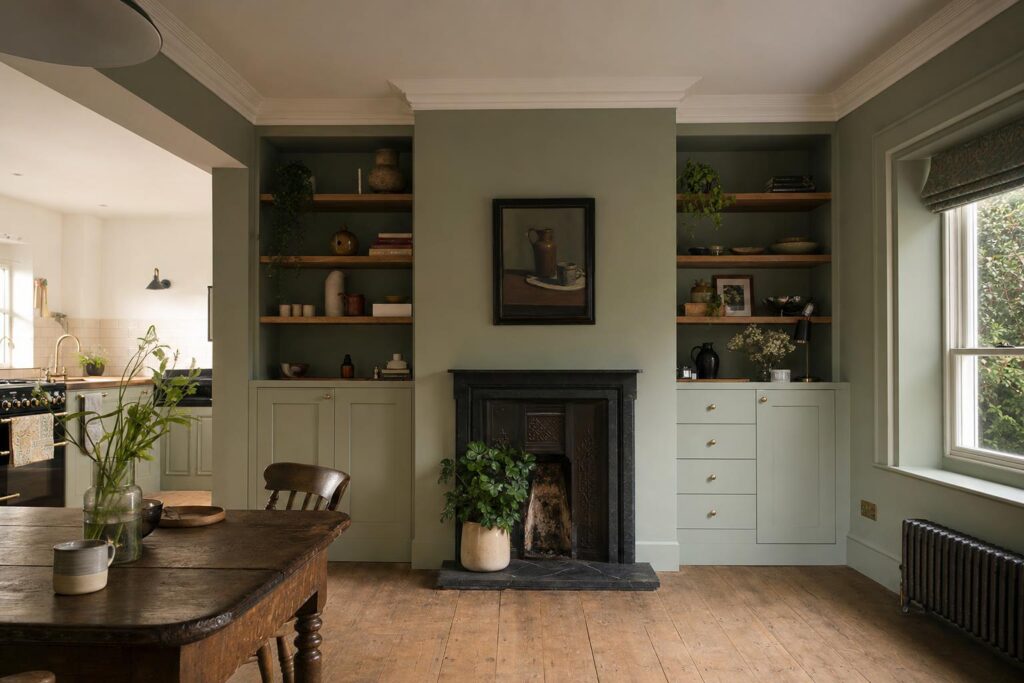
Bespoke alcove joinery is having a proper moment in 2026, and for once it is a trend that makes complete sense. A lot of UK homes, especially older ones, are full of awkward spaces. Chimney breast alcoves, uneven walls, shallow corners, half-depth recesses, old fireplaces, boxed-in pipework and rooms that have clearly had three different lives before you moved in.
Flat-pack furniture rarely deals with those spaces well. You either end up with a gap down the side, a unit that sticks out too far, or storage that looks like it has been squeezed in because there was nowhere else for it to go. Bespoke alcove joinery solves the problem properly. It uses the shape of the room instead of fighting it.
In our experience, this is where good joinery earns its keep. Not in shouting for attention, but in making a tricky part of the house look settled, useful and thought through.
Why bespoke alcove joinery suits UK homes so well
Many British homes were not built around neat modern furniture sizes. Terraces, cottages, townhouses and older semis often have fireplaces, chimney breasts, wonky plaster, picture rails, deep skirtings and alcoves that are never quite the same width on both sides.
That is not a flaw. It is part of the character of the building. The problem starts when you try to force standard furniture into non-standard spaces.
Bespoke alcove joinery can be made to fit the room as it actually is. The cupboards can follow the floor, sit neatly against the chimney breast, work around pipes, line up with existing details and finish at a height that feels natural. Done well, it looks as though it has always been there.
That is why alcove cupboards, built-in shelving and fitted storage are cropping up more in renovation plans. Homeowners are looking past quick fixes and asking how every bit of space can work better.
Bespoke alcove joinery is not just for living rooms
Most people think of alcove joinery as two cupboards either side of a fireplace with shelves above. That is a classic for a reason, but it is only one version of the idea.
In a kitchen or dining space, alcove joinery can become a slim pantry, a breakfast cupboard, a drinks cabinet, a place for cookbooks, or a run of storage that takes pressure off the main kitchen. In a hallway, it can hide shoes, coats, school bags and all the everyday clutter that otherwise ends up in a pile. In a bedroom, it can turn wasted recesses into wardrobes or linen storage without blocking the room.
The trick is to start with what the space needs to do, not just what it should look like. A pretty shelf is fine, but if you need storage for board games, paperwork, pet supplies, glassware or cleaning kit, the joinery has to be planned around that from the start.
Where cheap alcove storage usually goes wrong
We have seen plenty of alcove units that looked acceptable on day one and started annoying the homeowner within months. The usual issue is that the joinery has been treated like a decorative box rather than something that has to survive daily use.
Common problems include shelves that sag, doors that catch, gaps that show against uneven walls, poor access to sockets, handles placed without thinking, and cupboards that are too shallow to store anything useful. Sometimes the proportions are wrong too. Shelves can be spaced so tightly that nothing fits, or cupboards can be built so high that the whole wall feels heavy.
Honest truth is, alcove joinery is simple in theory but fussy in practice. The measurements matter. The wall condition matters. The thickness of the material matters. So does the way the unit is fixed, scribed, painted and finished.
Good bespoke alcove joinery starts with proper planning
A good joiner will talk through how you actually use the room before drawing up the unit. That conversation is worth having because it changes the design.
- Do you want open shelves, closed cupboards, drawers, or a mix?
- Are you hiding clutter or displaying books, ceramics and family pieces?
- Do sockets, lighting or media cables need to be built in?
- Should the joinery match the wall colour or stand out as a feature?
- Will the shelves hold heavy items, or mostly decorative pieces?
- Does the room need ventilation around a fireplace, radiator or appliance?
Those answers affect everything from the depth of the cupboard to the door style and shelf thickness. It is the difference between fitted storage that just fills a gap and fitted storage that genuinely improves the room.
Materials and finishes make a big difference
For painted alcove joinery, moisture-resistant MDF is often a sensible choice for stable, clean cabinet work, especially when it is properly primed and finished. Timber details can be added where they make sense, such as oak shelves, solid lipping or a timber work surface.
If you want a more furniture-like feel, hardwood, oak veneer or a mix of painted and natural timber can work beautifully. The best choice depends on the room, budget, use and finish. There is no point spending money in the wrong place, but there is also no point saving a small amount on material if the finished unit feels flimsy.
Paint colour matters as well. Matching the wall can make the joinery feel calm and built-in. Going darker can make a chimney breast or alcove feel more deliberate. Natural timber shelves can stop painted cupboards feeling too flat. The detail should suit the house, not just whatever is fashionable this month.
Why alcove joinery adds more than storage
The obvious benefit is storage, but the bigger benefit is often how it changes the feel of a room. Awkward alcoves can make a wall look unfinished. Built-in joinery gives the room shape, balance and purpose.
It can also make a renovation feel more considered. Instead of buying separate pieces of furniture over time and hoping they work together, the room gets a fixed element that suits the architecture. That is especially useful in period homes, where the best work often looks quiet rather than brand new.
It is the kind of thing you notice every day. Doors that close properly. Shelves at the right height. No wasted strip of space beside the chimney breast. No freestanding cabinet rocking on an uneven floor. Just a tricky part of the house finally doing its job.
Is bespoke alcove joinery worth it?
If the space is simple and you only need a temporary fix, standard furniture may be enough. But if the room has awkward proportions, visible gaps, uneven walls or storage that needs to work hard, bespoke alcove joinery is usually worth considering.
It gives you control over size, storage, style and finish. More importantly, it avoids that nearly-right look that often happens when standard furniture is pushed into a space it was never made for.
Worth getting right the first time, especially in rooms you use every day.
Thinking about bespoke alcove joinery, a new kitchen, or fitted storage for an awkward space? Give us a call on 07904 794280 or message us on Facebook. We are always happy to talk through what is possible and what will actually work in your home.