

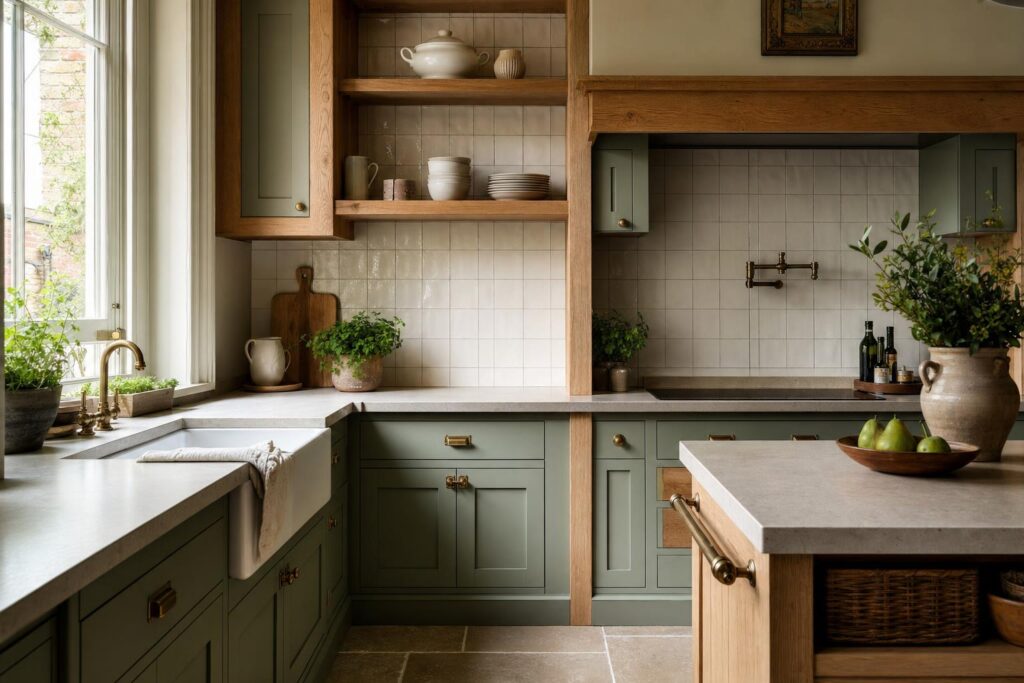
Real wood kitchen finishes are back on plenty of homeowners’ wish lists for 2026, and honestly, it is not hard to see why. After years of very flat, very smooth, very perfect kitchens, people want materials with a bit of grain, warmth and proper character. The trick is knowing where real timber earns its keep, where veneer makes more sense, and where a painted finish will still do the job better.
In our experience, the best kitchens are not the ones where every single surface shouts for attention. They are the ones where the materials feel balanced. A bit of oak against a painted cabinet. Brass handles that age properly. A stone or solid surface worktop that can take daily use. Timber used in the right places can make a kitchen feel settled, not showroom fresh in a way that dates before the kettle has even boiled.
Why real wood kitchen finishes are having a moment
A lot of the current kitchen trend talk is about natural materials, warmer colours and rooms that feel less clinical. You see it in oak shelving, walnut interiors, aged brass, handmade tiles, honed stone and soft painted cabinetry. It is not about making everything rustic. It is about putting some texture back into the room.
That makes sense in a UK home. Most kitchens are not huge. They have awkward corners, low winter light, radiators in annoying places and walls that are not as straight as anyone would like. A run of completely flat white cupboards can look clean, but it can also feel cold. Timber brings depth. It catches the light. It gives the eye something to land on.
Honest truth is, wood also shows the hand of the maker. A proper grain match, a neatly lipped shelf edge, a solid drawer front or a well-made breakfast cupboard says more about quality than a long list of glossy brochure words ever will.
Where real wood kitchen finishes work best
You do not need timber everywhere to get the benefit. In fact, using it carefully usually looks better and costs less than trying to turn the whole room into a timber box.
- Open shelves: Good quality oak, ash or walnut shelves can soften a run of painted cabinets and give everyday crockery a proper home.
- Drawer boxes: Solid timber drawer boxes are one of those details you notice every day. They feel better, sound better and last better than flimsy alternatives.
- Larder interiors: A painted outside with a timber interior gives you the best of both worlds. Clean from the room, warm and practical when opened.
- Feature cabinets: A dresser, breakfast cupboard or island in timber can give the room a focal point without overwhelming it.
- End panels and framing: Timber details at the ends of runs, around seating or beside a chimney breast can make fitted cabinetry feel more like furniture.
A good joiner will help you decide where the money is best spent. Sometimes one well-made timber cabinet does more for a room than paying for real wood across every door and panel.
Solid wood, veneer or painted cabinetry?
This is where it is worth being practical. Solid wood is beautiful, but it moves. Kitchens are damp, warm, busy rooms. Doors are opened with wet hands, kettles boil, dishwashers steam and sunlight hits the same spot every morning. Timber has to be used with that in mind.
For many kitchen doors, a high-quality timber veneer over a stable board can be the sensible choice. You still get the grain and the warmth, but the door is less likely to twist or cup. That is not a cheap compromise when it is done properly. It is often the right construction for the job.
Painted cabinetry still has its place too. It suits shaker-style kitchens, lets you bring in colour without making the space too busy, and can be touched up over time. If you want a soft green, mushroom, clay or deep blue kitchen, painted timber or painted MDF can work very well, especially with real wood used inside drawers, shelves or a larder.
The main thing is not to get talked into one material because it sounds posh. The right answer depends on the room, the budget and how the kitchen will be used.
What to watch before choosing timber finishes
Wood is not difficult to live with, but it does need a bit of respect. If you are choosing real wood kitchen finishes, ask these questions before anything is ordered.
- How will it be sealed? Oil, lacquer and hardwax finishes all behave differently. You want the finish to suit the part of the kitchen it is used on.
- Will the grain be matched? Random grain can make expensive timber look messy. Grain matching matters, especially on visible door runs.
- Is the board stable? Wide solid panels can move. A stable core with timber veneer is often the better build.
- Can it be repaired? One of the joys of proper timber is that marks can often be sanded, refinished or lived with as character.
- Will it suit the rest of the house? The kitchen should feel like it belongs, not like it was lifted from somebody else’s Instagram.
We have seen this go wrong plenty of times when the finish is chosen from a tiny sample without thinking about the full room. A small piece of walnut can look stunning in your hand. Across a full wall of cabinets, it might make the room feel heavy. Oak can look warm and calm, but too much pale oak with pale flooring can wash everything out. Samples matter, but layout and light matter more.
How bespoke joinery helps you get the balance right
This is where bespoke joinery earns its keep. Off-the-shelf kitchens often make you choose from fixed finishes and standard panels, then work around whatever awkward gaps are left. With bespoke work, the material choice can follow the room.
If an old chimney breast would suit an oak dresser, it can be built to fit. If a larder needs painted doors outside and timber racks inside, that can be made properly. If the island wants a harder-wearing painted finish on the working side and a warmer timber face on the seating side, that can be designed in from the start.
It also means the smaller details can be sorted properly. End grain. Shelf thickness. Handle positions. Shadow gaps. Plinths. Corners. These are the things that separate a kitchen that looks good for six months from one that still feels right years later.
Our take on timber kitchens for 2026
Real wood kitchen finishes are worth considering if you want a kitchen with warmth, texture and a bit of honesty about it. Just do not feel you have to use timber everywhere. The best results often come from mixing materials carefully: painted cabinets, timber interiors, stone or composite worktops, proper handles and joinery that fits the house rather than fighting it.
Worth getting right the first time, because timber is the kind of thing you notice every day. Done well, it gets better with use. Done badly, it just becomes an expensive reminder that materials need proper thought.
Thinking about a new kitchen or a bespoke joinery project? Give us a call on 07904 794280 or message us on Facebook. We are always happy to talk through what will work in your home and what is worth leaving well alone.