

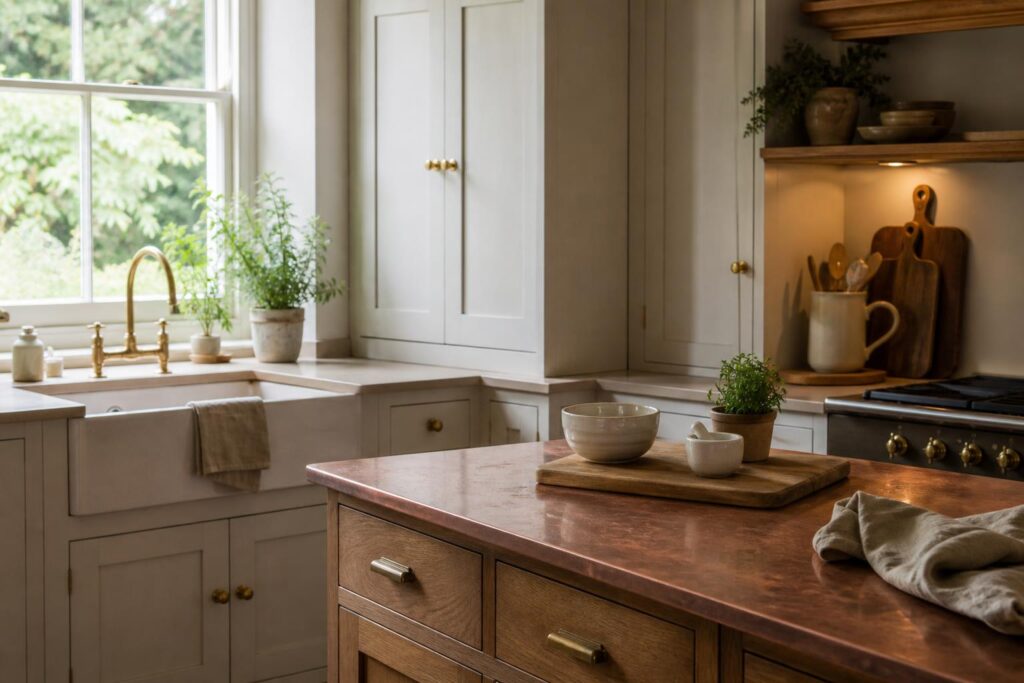
Copper kitchen worktops are one of those 2026 kitchen ideas that look brilliant in the right room and completely wrong in the wrong one. We are seeing more interest in aged metals, darker timber, natural stone and kitchens that feel lived in rather than showroom-perfect. Copper sits right in that world. It has warmth, character and a bit of old workshop charm about it.
Honest truth is, though, copper is not a fit-and-forget surface. If you want a pristine, identical finish every day, it may drive you mad. If you like materials that pick up marks, deepen in colour and tell the story of how the kitchen is used, copper can be a lovely detail. The trick is knowing where to use it and where not to.
Why copper kitchen worktops are back on the radar
The past few years have pushed kitchens away from flat grey units and cold, polished finishes. Homeowners are asking for more texture, more natural materials and a bit more personality. You can see it in the rise of oak pantry walls, hand-painted cupboards, aged brass handles, terracotta floors and darker, moodier kitchen schemes.
Copper fits that shift because it softens a room. It catches light without looking glossy, and it works well with timber, painted joinery and natural stone. In a bespoke kitchen, it can also be used as a feature rather than covering every surface. That is usually where it earns its keep.
Where copper kitchen worktops work best
In our experience, copper is at its best when it is used with a bit of restraint. A full run of copper worktop around an entire kitchen can be expensive and, for some homes, too much visually. A smaller area often feels more considered.
- A prep table or island top where the copper becomes a proper focal point
- A pantry counter where it adds warmth against painted or timber cabinetry
- A drinks area, breakfast cupboard or coffee station
- A short worktop run paired with stone, timber or composite elsewhere
- A splashback panel behind a range or sink, if detailed properly
That mix of materials can make a kitchen feel more settled. It also helps keep the budget under control. You get the character of copper without asking it to do every job in the room.
The finish matters more than most people realise
There is a big difference between shiny new copper and aged copper. Bright copper can look a bit too fresh at first, almost like a new penny. Aged or patinated copper has more depth and usually sits better in a kitchen with proper joinery.
Over time, copper naturally changes. It darkens, marks and develops a patina. That is part of the appeal, but only if you are expecting it. Acidic foods, water marks, fingerprints and cleaning products can all affect the surface. A good supplier will talk you through sealed and unsealed options, and a good joiner will make sure the substrate, edging and junctions are properly planned before anything is fitted.
What to watch before choosing copper
Copper is not the right answer for every household. If you have a busy family kitchen and you want every surface to look the same at all times, quartz or a hard-wearing compact surface may suit you better. If you are happy with a material that evolves, copper has much more charm.
- Scratches: copper is softer than stone, so marks will happen.
- Patina: the colour changes with use. That is normal, not a fault.
- Cleaning: harsh cleaners can strip or stain the surface.
- Edges: poor detailing around corners and seams can spoil the whole look.
- Budget: it is usually a feature material, not a cheap substitute.
Worth getting right the first time. A copper top slapped onto standard units rarely looks convincing. It needs the cabinetry, handles, lighting and surrounding materials to work with it.
Why bespoke joinery makes copper easier to get right
This is where bespoke joinery has a real advantage. With off-the-shelf units, you are often trying to make a special material fit a standard layout. With a made-to-measure kitchen, the copper can be planned from the start. The overhang, edging, support, drawer lines, appliance positions and adjoining worktops can all be designed around the material.
A good joiner will also think about the rest of the room. Copper can look brilliant against deep green, warm white, charcoal, oak, walnut and earthy plaster tones. It can look less convincing next to very glossy doors or cold white surfaces. The surrounding joinery should let the copper feel like it belongs, not like it has been dropped in because it was trending online.
So, are copper kitchen worktops worth it in 2026?
Yes, if you want character and you are honest about the upkeep. No, if you want a perfect surface that never changes. That is the simple answer.
For most UK homes, the best use of copper is as a carefully chosen feature: an island, prep table, pantry counter or small run where it can bring warmth without taking over. Paired with proper bespoke cabinetry, it can give a kitchen a really grounded, made-for-the-house feel.
If you are thinking about a new kitchen, worktop detail or bespoke joinery project, give BH Bespoak a call on 07904 794280 or message us on Facebook. We are always happy to talk through what will work in your home, and what is best left on the mood board.