

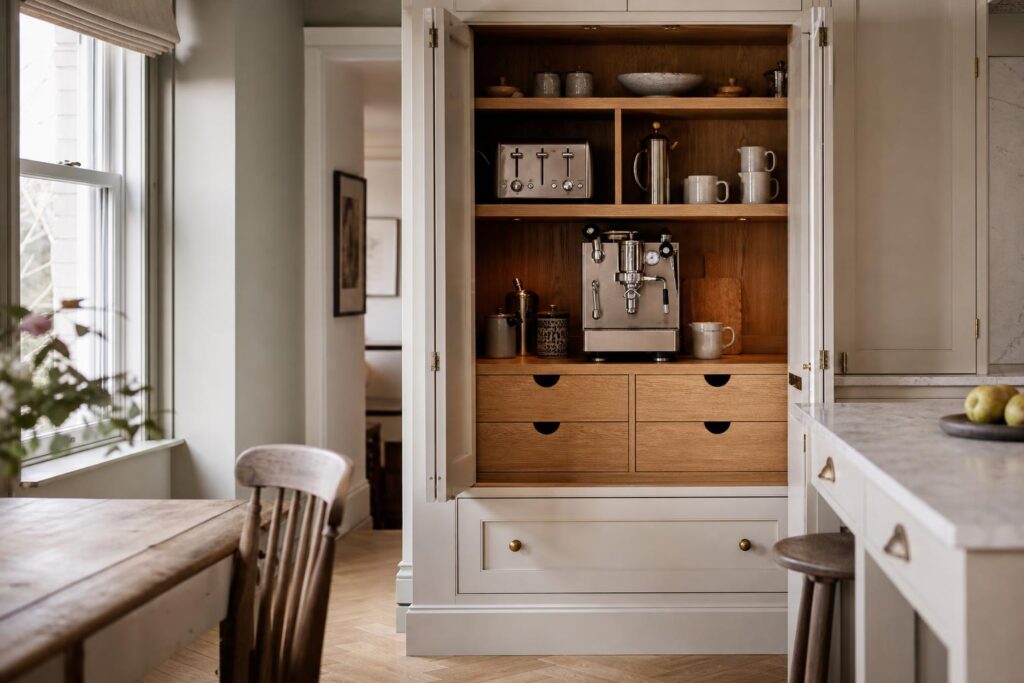
Breakfast cupboard joinery is one of those kitchen ideas that looks simple once it is finished. Doors open, kettle and coffee machine inside, toaster tucked away, mugs where you need them, worktop clear again when the doors close. Lovely. But the honest truth is, the neat version only works when it has been planned properly from the start.
We are seeing more homeowners ask for this kind of hidden morning station in 2026. It fits with the wider move towards calmer kitchens, less clutter on show, and rooms that feel lived in without looking messy. Competitor design blogs are talking about layered kitchens, freestanding furniture, pantries, pocket doors and softer, more personal finishes. That all makes sense. The bit that matters on site is how the joinery actually works day to day.
A breakfast cupboard can be a brilliant addition, but it is not just a tall unit with a socket thrown in at the end. The door type, internal worktop, ventilation, lighting, shelf heights, appliance sizes and cable routes all affect whether it becomes useful or irritating.
Why breakfast cupboard joinery is having a moment
Most kitchens now have more small appliances than they used to. Coffee machines, grinders, air fryers, stand mixers, toasters, blenders, chargers and all the bits that go with them. Some of those items are used every day, so hiding them in a deep cupboard on the other side of the room is not realistic. Others are ugly enough that nobody really wants them sitting on the main worktop all week.
That is where a well-built breakfast cupboard earns its keep. It gives you a working zone, not just storage. You open the doors in the morning, make drinks and toast, then close everything away when you are done. It is especially useful in open-plan kitchens where the room has to look half decent from the sofa or dining table.
In our experience, people do not want show kitchens. They want kitchens that can cope with real life, then tidy up quickly. A breakfast cupboard does that, provided the joinery has enough thought behind it.
Pocket doors can be excellent, but only if the carcass is built for them
Pocket doors are popular because they slide back into the sides of the cupboard, leaving the working area open without big doors sticking out into the room. For a breakfast station, that can make a lot of sense. Nobody wants to dodge a tall door while making tea.
The catch is that pocket doors need space. The runners, door thickness, side voids and internal clearances all matter. If the unit is too narrow, you lose useful storage inside. If the mechanism is cheap, badly fitted or asked to carry too much weight, it will feel flimsy and start causing problems.
A good joiner will work out the door hardware before building the cupboard, not after. The finished cupboard should open smoothly, stay put when pushed back, and close without rubbing. That sounds obvious, but we have seen plenty of kitchens where the clever door system was treated like an accessory. It is not. It is part of the structure.
Plan the electrics before the kitchen is fitted
If you are putting a kettle, toaster or coffee machine inside a cupboard, electrics are not an afterthought. You need sockets in the right place, cables that do not trail across the shelf, and enough room for plugs without pushing appliances forward.
It is also worth thinking about heat and steam. A toaster or kettle in a fully enclosed cupboard needs sensible use and proper clearance. Some people prefer the cupboard as a storage and prep station, then pull appliances forward when in use. Others want a more permanent coffee setup inside. Either way, it should be discussed before the electrician has finished first fix.
Small LED lighting can also make a big difference. Not showy lighting, just practical light so you can see what you are doing on a dark morning. Again, that means planning the wiring properly.
The inside needs to be as good as the outside
With breakfast cupboard joinery, the inside is on show every time you use it. That means the internal finish matters. Painted exterior doors with a bare, poorly finished inside never feel right. Oak veneer, solid lipping, painted internals or a worktop-matched shelf can all work, depending on the rest of the kitchen.
Think about what actually lives in there. Mugs, tea, coffee pods, cereal, bread, spreads, chopping boards, appliance manuals, cleaning cloths, breakfast bowls. Deep shelves can swallow everything and make the back impossible to reach. Shallow shelves, small drawers and pull-out trays usually work better.
One of the best details is a proper internal work surface. It protects the cupboard base and gives you somewhere to make a drink without dragging everything onto the main worktop. Stone, compact laminate, timber and even a tough painted surface can work, but it needs to suit the way you use the cupboard.
Where a breakfast cupboard should sit in the kitchen
Position is the part people often underestimate. A breakfast cupboard wants to be near the kettle point, mugs, fridge and bin if possible. If it is too far away from everything else, it becomes a nice idea that nobody bothers using.
It also needs room in front of it. Pocket doors help, but someone still needs to stand there and make breakfast without blocking the whole kitchen. In a narrow room, a smaller countertop cabinet might be better. In a larger kitchen, a full-height breakfast cupboard in a bank of tall units can look clean and work brilliantly.
The best place depends on the room, not the trend. That is why bespoke joinery is useful. You can build around the real layout rather than forcing a standard unit to do a specialist job.
What to ask before you commit
Before adding a breakfast cupboard to your kitchen plan, ask a few straight questions:
- Which appliances will live in it, and what are their exact sizes?
- Will those appliances be used inside the cupboard or stored there between uses?
- Do you want pocket doors, bi-fold doors, standard doors or a tambour style front?
- Where do sockets, lighting and cable routes need to go?
- How much internal drawer storage do you need?
- Is there enough clearance for heat, steam and daily use?
Answer those early and the cupboard can be built properly. Leave them until the fitting stage and you will end up compromising.
Worth getting right the first time
A breakfast cupboard is not essential in every kitchen. Some rooms do not need one, and some budgets are better spent elsewhere. But when it suits the way you live, it can be one of the most useful pieces of joinery in the room.
The key is treating it as proper working joinery, not a pretty cupboard with gadgets inside. Good proportions, decent hardware, sensible electrics and useful storage will matter far more than chasing a photo you have seen online.
Thinking about a new kitchen or a bespoke joinery project? Give us a call on 07904 794280 or message us on Facebook. We are always happy to talk through what will work in your home and what is worth getting right before the build starts.