

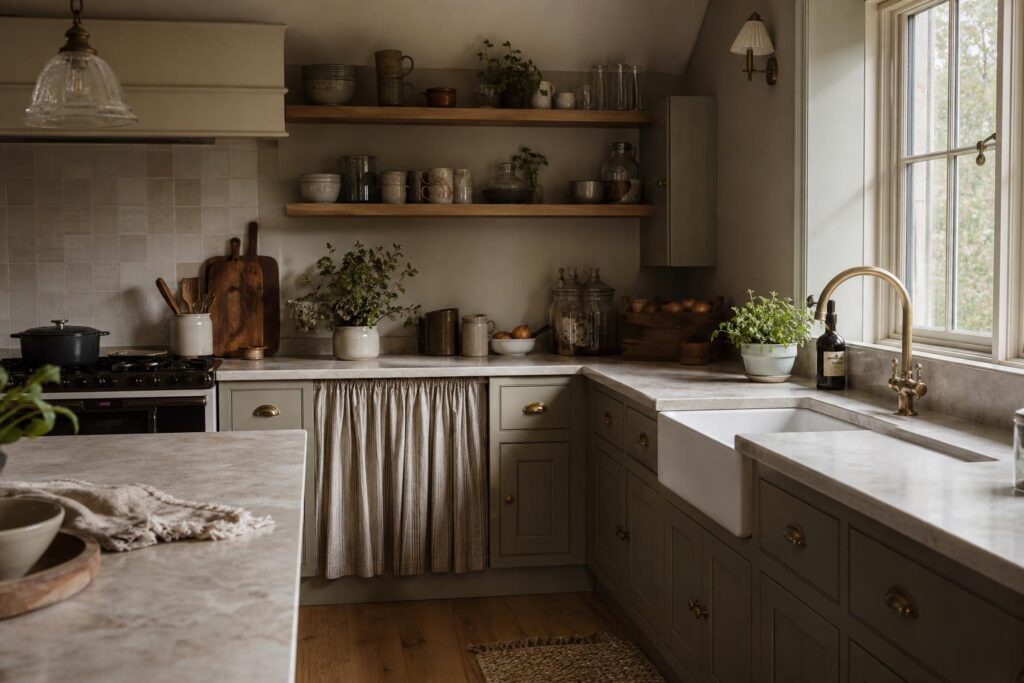
Soft kitchen joinery is getting a lot of attention in 2026, and for good reason. After years of very crisp, very flat kitchens, more homeowners want rooms that feel warmer, calmer and a bit more lived-in. Fabric, timber, open shelves, furniture-style pieces and softer cabinet details are all coming back into the conversation. Done properly, it can look brilliant. Done badly, it can look like someone tried to hide a cheap kitchen with a curtain.
In our experience, the difference is usually in the joinery. A soft kitchen still needs strong carcasses, well-fitted doors, sensible clearances and materials that can cope with daily use. The softer details should be built into the design from the start, not added at the end because the room feels too plain.
What soft kitchen joinery actually means
Soft kitchen joinery is not about making the kitchen weak, fussy or old-fashioned. It is about taking the edge off a fitted room so it feels more like part of the home. That might mean a run of painted cabinets with exposed hinges, a freestanding-style island, a fabric curtain below a prep area, timber shelving, a plate rack, or a larder that looks like a proper piece of furniture.
The honest truth is that many modern kitchens have become a bit too hard. Flat doors, sharp corners, huge slabs of stone, hidden handles and matching everything can make a room feel cold, even when the materials are expensive. Softening the joinery gives the kitchen more character without throwing away the practical benefits of a fitted layout.
The trick is knowing where to soften it. A good joiner will not put fabric or open shelving everywhere. They will look at how the room is used, where the mess happens, which areas need to be easy to clean, and which details can carry a bit more charm.
Why soft kitchen joinery works well in real homes
Most kitchens are not showroom kitchens. They hold school bags, mugs, post, dog leads, pans, chargers, shopping and all the little bits that life brings with it. A slightly softer approach accepts that reality instead of pretending the kitchen will always look untouched.
Fabric curtains under a worktop can work well in the right place, especially in a utility corner, boot room area, pantry run or informal prep space. They give access without needing another door swing, and they can soften a long run of cabinetry. But they need a proper rail, sensible fixing, washable fabric and enough space behind them so they do not bulge out awkwardly.
Open shelves can also be useful, but only when they are designed for things you actually use. A couple of oak shelves for bowls, glasses or everyday plates makes sense. A wall of open shelves full of items that gather dust is less clever. Worth getting right the first time.
Furniture-style joinery is another strong route. Raised feet, framed end panels, inset doors, visible rails and mixed timber details can stop a kitchen looking like one continuous block. That matters in older UK homes, cottages, terraces and extensions where a very rigid kitchen can fight the building rather than suit it.
Where the softer details should go
Not every part of the kitchen is the right place for soft detail. Around the hob, sink and dishwasher, practicality should come first. Those are high-use, high-moisture areas, so you want materials that clean easily and fittings that stay steady over time.
The softer touches usually work best in supporting areas:
- Breakfast cupboards and coffee stations
- Pantries and larder runs
- Utility areas and boot room corners
- Islands and freestanding-style prep tables
- Display shelving for everyday crockery
- Seating nooks and dresser-style storage
These areas can carry more personality because they are not doing the heaviest work every minute of the day. That is where fabric, timber grain, curved edges, framed panels and warmer paint colours can make the room feel settled.
Soft kitchen joinery still needs proper construction
This is where bespoke work earns its keep. The softer a kitchen looks, the more important the construction becomes. A curtain below a worktop still needs a square, well-built opening behind it. A furniture-style island still needs to sit level. Open shelving still needs proper fixings. Inset doors still need accurate gaps. There is nowhere to hide poor workmanship.
We have seen this go wrong plenty of times when people try to copy a magazine look with standard cabinets. The proportions are off, the curtain rail looks like an afterthought, the shelves sag, or the end panels do not line up with the rest of the room. It is the kind of thing you notice every day once it is fitted.
A bespoke joiner can make those softer details part of the build. That means the curtain section is sized properly, the open shelves match the cabinet rhythm, the timber tones sit comfortably with the painted doors, and the whole kitchen still feels intentional.
Materials matter more with a softer kitchen
Soft kitchens tend to put materials under the spotlight. If you are using painted timber, oak shelving, linen curtains or honed stone, you cannot rely on a shiny finish to distract the eye. The quality of the materials shows.
Solid timber details can bring warmth without making the whole kitchen feel heavy. Painted cabinets in muted greens, warm whites, clay tones or deep blues can feel softer than stark grey or black. Worktops with a honed or lightly textured finish often sit better with this style than anything too glossy.
That does not mean everything has to be delicate. In fact, the best soft kitchens usually balance warm details with robust construction. Strong hinges, proper drawer runners, durable finishes and well-sealed edges still matter. The kitchen should feel relaxed, but it should not be fragile.
A good soft kitchen is planned, not dressed up afterwards
The main mistake is treating softness as decoration. You cannot simply fit a standard kitchen and then add a few baskets, a curtain and a bit of timber trim afterwards. Sometimes that works, but usually it looks patched together.
If you want this look, talk about it early. Think about which cupboards should feel fitted, which pieces should feel more freestanding, where open storage is useful, and where closed storage is the better answer. Think about cleaning, handles, gaps, fabric choice, appliance positions and how the kitchen will look when it is being used, not just photographed.
In our view, soft kitchen joinery is one of the better 2026 trends because it puts comfort and craftsmanship back into the room. It suits homes where people actually cook, gather, work, make tea, drop things on the side and live their lives. But it only works when the practical bits are taken seriously.
Planning a warmer kitchen with proper joinery
If you like the idea of a warmer, softer kitchen, start with the layout and the joinery before choosing colours and fabrics. Once the bones are right, the softer details have something solid to sit on. That is what makes the difference between a kitchen that feels charming for a few months and one that still feels right years later.
Thinking about a new kitchen or bespoke joinery project? Give us a call on 07904 794280 or message us on Facebook. We are always happy to talk through what would work in your home.