

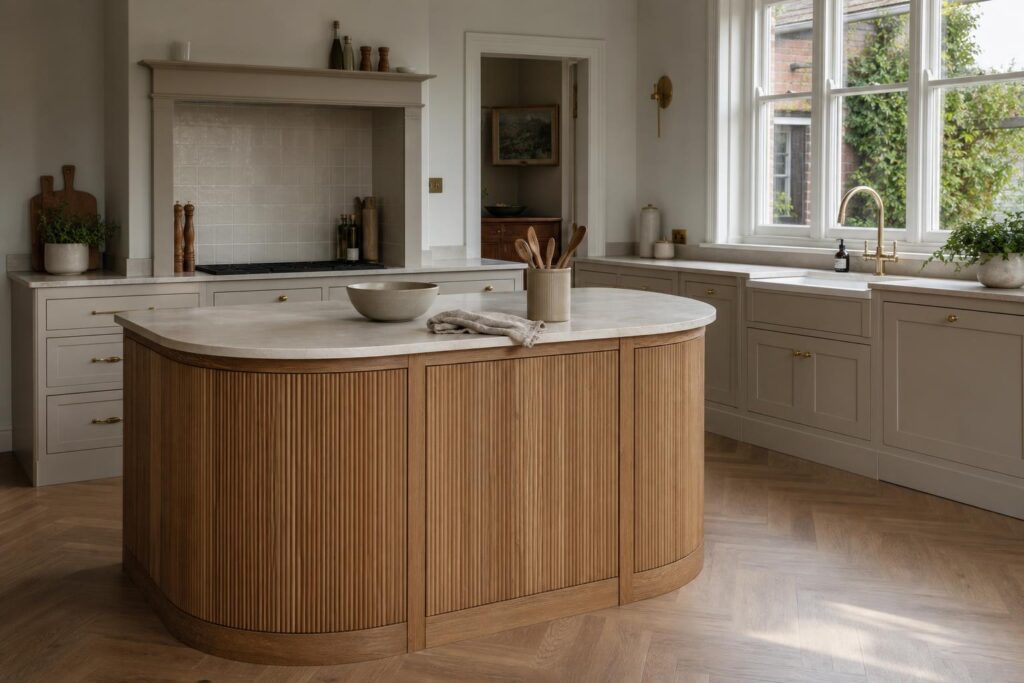
Fluted kitchen joinery is having a proper moment in 2026. You see it on island fronts, tall pantry doors, breakfast cupboards and sometimes across a whole run of cabinets. Done well, it gives a kitchen depth, warmth and a bit of craft without shouting for attention. Done badly, it becomes a dust trap, a snagging list and an expensive way to make a room feel busy.
Honest truth is, textured joinery is one of those trends where the fitting matters just as much as the idea. A flat door can hide a lot. Fluting, reeding and ribbed timber do not. Every line catches the light, which means every poor joint, uneven gap and awkward corner is right there in front of you. If you are planning a kitchen this year and thinking about fluted detail, it is worth understanding where it works, where it does not, and what needs deciding before anything gets made.
Why fluted kitchen joinery is so popular in 2026
A lot of homeowners are moving away from dead-flat, all-white kitchens. They still want clean lines, but they also want a room that feels warmer and more personal. Fluted kitchen joinery sits nicely in the middle. It adds texture without needing fussy mouldings, heavy cornices or lots of decorative handles.
There is also a practical reason it has taken off. Many UK homes now have kitchen islands or peninsulas facing into a dining space. The back of that island is often the bit you see most from the sofa or table. Plain flat panels can look a bit blank there, especially in an open-plan room. A fluted oak or painted timber panel gives that face of the island a finished, furniture-like look.
In our experience, it is at its best when it feels like part of the joinery, not a panel stuck on at the end. The grain direction, edge framing, plinth line and worktop overhang all need to be thought through together. That is where bespoke work earns its keep.
Where fluted kitchen joinery works best
The strongest place for fluted kitchen joinery is usually an island front. It gives a big block of cabinetry some movement, especially if the island has a curved corner or soft radius at the end. The lines help the eye travel around the shape, which makes the whole piece feel more considered.
It can also work well on a breakfast cupboard or drinks cabinet. If the rest of the kitchen is fairly calm, one tall textured feature can make the room feel less standard. The trick is restraint. You do not need every door to have ribbing on it. Often, one strong feature is enough.
- Island backs and end panels
- Curved corners where the detail can wrap cleanly
- Feature larder or breakfast cupboard doors
- Timber sections in an otherwise painted kitchen
- Small runs of open storage where shadow and texture add interest
One thing we would be careful with is using heavy fluting on every base cabinet. It can make a kitchen feel restless, and it gives you more grooves to keep clean around the busiest parts of the room. Around bins, dishwashers and sink runs, simpler is often better.
The joinery details that make or break it
Fluted work looks simple from a distance, but it asks a lot from the joiner. The spacing needs to be consistent, the depth needs to suit the material, and the start and finish points need planning. If the last flute dies awkwardly into a corner, you will notice it every day.
On an island, the biggest decision is how the textured face meets the sides. If the island has straight ends, you can frame the fluted panel neatly and keep the detail on the front face only. If it has curved ends, the material and construction method matter more. Some details bend or wrap better than others. Trying to force the wrong profile around a curve is how you end up with splitting, gaps or a finish that never looks quite right.
There is also the question of shadow. A deeper flute gives more drama, but it also shows dust more easily and can look heavy in a small room. A finer reeded detail is quieter and often better suited to painted finishes. A good joiner will talk you through this before you commit, ideally with samples you can see in the light of your own room.
Timber, painted finish or veneer?
Natural timber is the obvious choice for fluted kitchen joinery because the grain and the shadow work together. Oak is popular for good reason. It is familiar, hard-wearing and warm without being too dark. Walnut can look beautiful, but it needs the right room and the right budget. Use too much of it in a small kitchen and it can start to feel heavy.
Painted fluting can also work, especially if you want a softer feature rather than a strong timber statement. The finish needs to be good, though. Grooved detail will show brush marks, thick paint build-up and poor sanding. If it is being sprayed, the profile needs to allow the paint to settle properly without clogging the lines.
Veneer has its place, but it should be specified properly. Cheap-looking veneer on a textured panel is not a shortcut we would recommend. The edges, corners and exposed ends need careful treatment, because those are the places that give the game away.
Cleaning and daily use matter
It is easy to get carried away with texture when you are looking at photos online. Real kitchens have sticky fingers, flour, steam, dog bowls, school bags and someone leaning against the island while making a cup of tea. That does not mean fluted joinery is a bad idea. It just means it needs to be used sensibly.
If a textured panel is on the seating side of an island, it will mostly deal with knees, shoes and the odd spill. That is manageable with the right finish. Put the same profile next to a hob or bin pull-out and it has a harder life. We would usually keep the most detailed joinery away from the messiest zones unless there is a good reason not to.
Finish choice matters too. A hard-wearing lacquer or well-specified paint system will make the difference between a feature that ages nicely and one that starts looking tired after a year. Worth getting right the first time.
Questions to ask before choosing fluted kitchen joinery
Before you sign off the design, ask a few plain questions. Where will the fluting start and stop? How will it meet the plinth, worktop and end panels? Can you see a sample in the chosen finish? How easy will it be to clean in that location? Will the lines suit the scale of the room?
The answers should be practical, not vague. If someone tells you it will all be fine but cannot explain how the detail is made or fitted, be careful. This is the kind of work where planning on paper is only half the job. The person making and fitting it needs to understand the material.
Our view on fluted kitchen joinery in 2026
We like it when it has a job to do. A fluted island front, a curved timber end or a feature cupboard can make a kitchen feel more crafted and less like a showroom set. It brings shadow, warmth and a bit of hand-made character. But it should be used with a steady hand.
The best kitchens in 2026 are not chasing every trend. They are taking good ideas and making them fit the house, the family and the way the room is actually used. Fluted kitchen joinery can absolutely be one of those good ideas, provided it is designed properly, made properly and fitted by someone who cares about the details.
Thinking about a new kitchen, island or bespoke joinery project? Give us a call on 07904 794280 or message us on Facebook. We are always happy to talk through what will work in your home and what is best left on the mood board.