

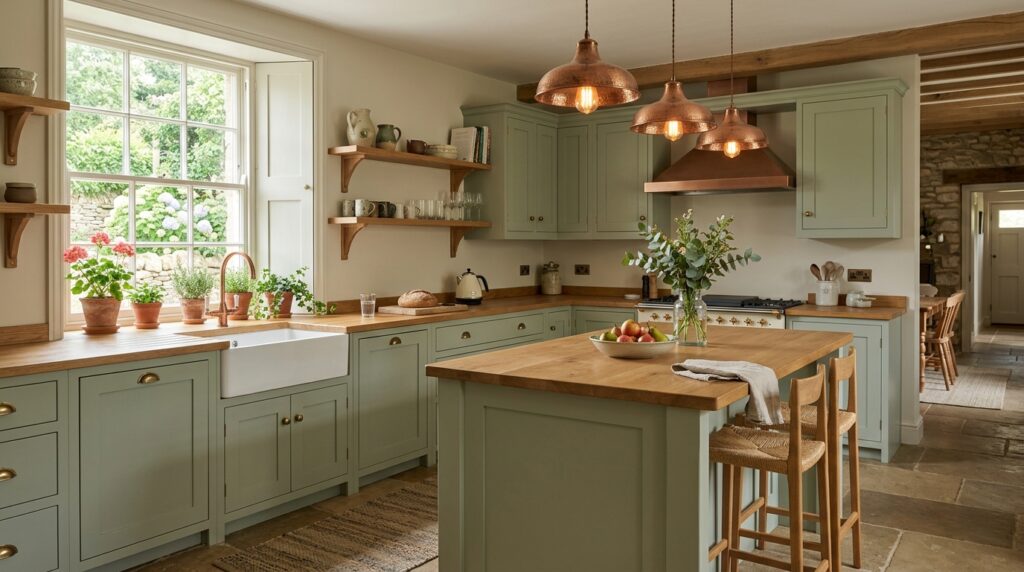
Planning a new kitchen is one of the most exciting home improvement projects you can take on. It is also, let us be honest, one of the most expensive. Whether you are dreaming of a sleek handleless design or a warm shaker-style kitchen full of character, the question everyone starts with is the same: what is this actually going to cost me?
This guide cuts through the noise. No vague ranges, no upselling. Just an honest look at what drives kitchen costs in 2026, where your money goes, and why the cheapest option is not always the most economical one in the long run.
The Three Tiers of Kitchen: A Realistic Starting Point
Before diving into numbers, it helps to understand that kitchens fall broadly into three categories, each with very different price points and very different outcomes.
1. Flat-Pack and DIY (£3,000 to £8,000)
This is the IKEA, B&Q, and Howdens end of the market. Units come in standard sizes, you (or a handyman) assemble and install them, and you choose from a limited range of door styles and finishes. For a tight budget or a rental property, this can work perfectly well.
The limitations show up over time. Standard carcass sizes mean awkward gaps in alcoves and around chimneys. Drawer runners and hinges are mid-range at best. And if your kitchen is anything other than a simple rectangle, making flat-pack units fit neatly becomes a puzzle with frustrating compromises.
2. Mid-Range Supply and Fit (£8,000 to £20,000)
This is where most UK homeowners land. You work with a kitchen company or local fitter who supplies units, doors, and worktops and installs them for you. The quality is noticeably better than flat-pack, and you get more design input. Companies like Wren, Magnet, and Wickes operate in this space, along with many independent kitchen suppliers.
At this level you can expect solid construction, a reasonable range of finishes, and a fitted result that looks polished. What you will not always get is anything made specifically for your space, your storage needs, or your taste.
3. Bespoke and Handcrafted (£15,000 to £50,000+)
At the top end, your kitchen is made entirely to order by a skilled joiner or bespoke kitchen maker. Every cabinet is built to the exact dimensions of your room. Drawer depths, shelf heights, internal fittings: all designed around how you actually use your kitchen. The materials are better, the craftsmanship is higher, and the result is something that feels genuinely unique to your home.
The price reflects that. But as we will come to, the comparison is not always as straightforward as the numbers suggest.
What Drives the Cost of a New Kitchen?
Understanding where the money goes helps you make smarter decisions about where to spend and where to save.
Units and Carcasses
The carcass is the box behind the door. In budget kitchens, these are made from lower-grade MDF or particleboard. At the bespoke end, solid wood or high-grade birch ply is standard. The difference matters: a quality carcass will outlast a budget one by decades, especially in kitchens where moisture is a factor.
Doors and Finishes
This is often where the biggest visible difference lies. Painted solid wood doors, handleless slab designs in lacquered MDF, or real-wood veneer all sit at different price points. The finish quality affects how a kitchen looks after ten years of daily use, not just on the day it is installed.
Worktops
Worktop choices range from laminate (from around £100 per metre) through solid wood and quartz (£200 to £500 per metre) to premium materials like granite, porcelain, or Corian (£400 to £800+). Your worktop is one of the most used surfaces in your home: this is not the place to cut corners if you can avoid it.
Appliances
Appliances are often quoted separately and can add anywhere from £2,000 for a basic set to £15,000 or more if you are specifying a range cooker, integrated fridge-freezer, and wine cooler. If you already have decent appliances, keeping them in a new kitchen is a sensible way to manage costs.
Installation and Trades
A kitchen installation involves multiple trades: joiner or kitchen fitter, electrician, plumber, plasterer, and possibly a tiler. Day rates for skilled tradespeople in the UK have risen significantly since 2020. Budget around £3,000 to £6,000 for a straightforward installation in most of England, and more in London and the South East.
Extras That Catch People Out
Structural work (moving a wall, adding a window), underfloor heating, rewiring, new plumbing runs, and decorating after the fit: these costs sit outside the kitchen quote and can add thousands. Always get a full scope of works before you budget.
The Bespoke Argument: Why Custom Joinery Often Makes More Sense Than You Think
Here is where we want to challenge the assumption that bespoke automatically means unaffordably expensive.
Consider a mid-range fitted kitchen from a national retailer at, say, £14,000 supply and fit. The units are standard sizes. There are two filler panels hiding the gap next to the cooker. The tall cabinet in the corner has slightly awkward internal shelving because it was designed for a different kitchen in a different house. In five years, a hinge breaks and the replacement part is discontinued.
Now consider a bespoke kitchen from a skilled local joiner at £18,000. Every cabinet is made for your specific room. The larder unit is exactly the depth you need. The island is positioned precisely where it works for how your family moves around the kitchen. The timber and hardware are specified to last. And if something needs attention in ten years, the person who made it is still local and still in business.
The gap in cost is smaller than it looks. The gap in quality and longevity is often much larger.
Practical Tips for Managing Your Kitchen Budget
Separate the phases if you need to
It is perfectly sensible to install a new kitchen and then add a splashback, new flooring, or redecorating in a later phase. Getting the joinery and worktops right is the priority; the finishing touches can follow.
Do not cut costs on installation
A poorly fitted kitchen is a daily frustration. Wonky doors, gaps at the ceiling, cabinets that are not quite level: these things grate. Find a fitter with a solid track record and references, and pay them properly.
Invest in the parts you touch most
Handles, taps, and drawer runners are the things you interact with every single day. Spending a little more here makes a bigger difference to your daily experience than almost anything else.
Get three quotes, but not just on price
When comparing quotes, ask each tradesperson to walk you through what they are actually proposing. Different quotes often include different things. The cheapest quote is not always the most cost-effective once you understand the scope.
Think about resale value
A well-designed, well-fitted kitchen adds measurable value to a property. Research consistently shows that kitchens and bathrooms have the highest return on investment of any home improvement. A bespoke kitchen done well is not just a cost: it is an investment in your home.
A Quick Guide to Budgeting Your Kitchen Project
If you are planning a kitchen renovation in 2026, here is a rough framework:
- Small kitchen (under 10 square metres): budget from £8,000 for a mid-range fit to £20,000 for a quality bespoke installation.
- Medium kitchen (10 to 15 square metres): budget from £12,000 for mid-range to £30,000 for bespoke, including appliances.
- Large open-plan kitchen-diner: budget from £20,000 upward, with bespoke installations regularly coming in at £35,000 to £50,000 for a premium result.
These figures assume a straightforward installation without major structural work. Always add a contingency of at least 10 to 15 per cent.
The Bottom Line
A new kitchen is one of the most significant investments you will make in your home. The right budget depends on your space, your priorities, and how long you plan to stay in the property. But the decision between flat-pack, mid-range, and bespoke is rarely as simple as picking a number.
If you are in a position to consider bespoke joinery, it is worth having that conversation early. You may find the difference in cost is smaller than you assumed, and the difference in outcome considerably larger.
If you are based in the UK and considering a bespoke kitchen or joinery project, we would love to talk. Get in touch to discuss your project and what is possible for your space and budget.