

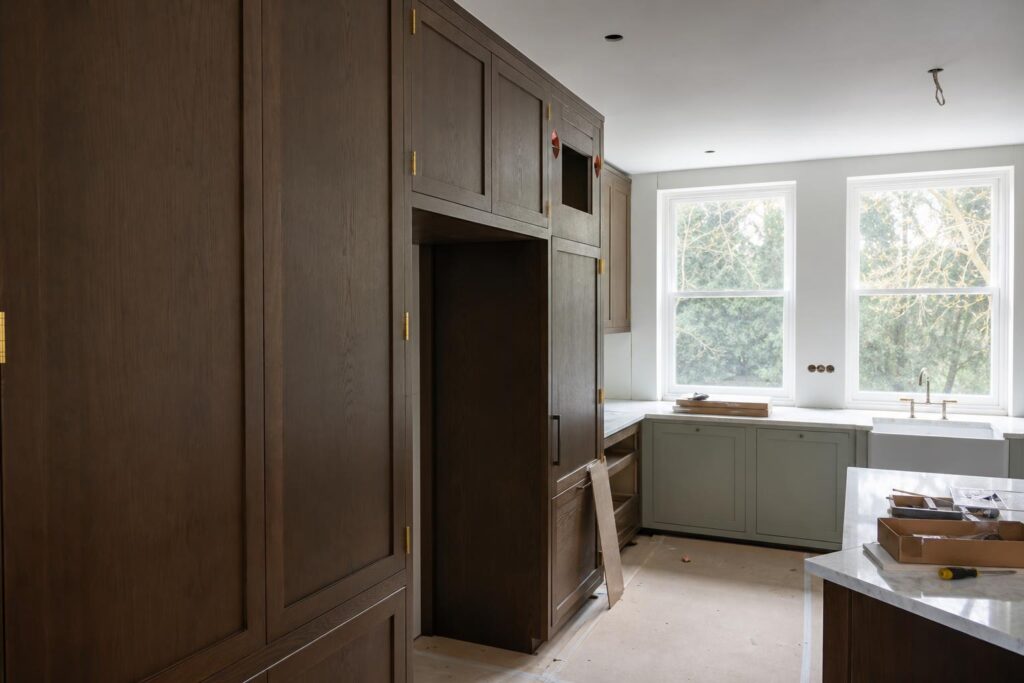
Dark oak pantry walls are one of those kitchen details that make a room feel properly considered. Not flashy. Not fussy. Just solid, useful joinery that gives the space a bit of weight and character.
We have seen plenty of kitchens where everything is painted the same colour, every cupboard is lined up in the same way, and the whole room feels a bit flat once it is finished. It might look tidy on a mood board, but real homes need warmth, contrast and somewhere for the eye to land.
That is where a dark oak pantry wall works so well. It brings the practical storage homeowners want, but it also gives the kitchen the feel of fitted furniture rather than a run of standard units. In our experience, that is the difference people notice every day.
Why dark oak pantry walls are catching on
The big kitchen trend for 2026 is not about chasing one particular colour or handle style. It is about rooms feeling warmer, calmer and more personal. People still want clean lines, but they do not want their kitchen to look like it came straight out of a showroom.
A dark oak pantry wall answers that nicely. It adds natural grain, depth and a bit of old-fashioned substance. Against painted cupboards, stone worktops or lighter walls, it gives the whole kitchen a stronger centre.
Honest truth is, timber does a job that paint cannot. You get variation in the grain, a richer tone as the light changes through the day, and a finish that feels more settled in the room. Done properly, it looks built for the house, not bolted into it afterwards.
A pantry wall gives storage a proper place
The best kitchens are not just about how the doors look. They are about where everything lives. A pantry wall can take care of the bits that usually clutter up worktops and base cupboards: dry food, breakfast things, small appliances, chopping boards, trays, spices, jars and all the daily odds and ends.
When that storage is grouped together in one well-planned wall, the rest of the kitchen can breathe. You are not stretching cupboard runs around every corner just because you need somewhere to put the cereal. You can design the room with a bit more intention.
A good joiner will think through how the wall is actually used. Deep shelves where they make sense. Internal drawers for things that get lost at the back. Pocket or bi-fold doors if you want an appliance zone that can stay open while you make breakfast. Proper hinges and runners that will cope with being used every day.
Why dark oak works better than flat black or plain painted units
Dark kitchens can look brilliant, but they can also go cold very quickly. Flat black doors, especially in a small or north-facing room, can feel heavy without adding much warmth. Dark oak is different because the grain keeps it alive.
You still get that richer, more grounded look, but with texture running through it. It sits well with off-white, soft green, deep blue, warm taupe and natural stone. It also works with brass, antique bronze or simple black ironmongery, depending on whether you want the kitchen to feel more traditional or more pared back.
It is the kind of detail that can make a painted kitchen feel less predictable. Rather than every door fighting to be the feature, the pantry wall does the heavy lifting and lets the rest of the room stay calm.
Where a dark oak pantry wall works best
This style is especially useful in kitchens that have one clear full-height wall. It might be the wall opposite the island, the end of an open-plan kitchen, or a run beside the fridge and ovens. Instead of treating that space as a standard cupboard bank, you can turn it into the main storage feature.
It also works well in older UK homes where you want new joinery to feel sympathetic rather than too shiny. The darker timber gives a bit of maturity, especially when paired with painted cabinetry and simple detailing.
That said, it needs measuring and designing properly. Dark timber can dominate if the proportions are wrong. Too many tall doors with no break can look like a wardrobe has wandered into the kitchen. Shelves, panel sizes, appliance zones and the way the doors open all matter.
What to get right before you build one
If you are thinking about a dark oak pantry wall, do not start with the stain colour. Start with what needs to go inside it. That will tell you how deep it should be, where drawers make sense, whether you need sockets, and whether any doors need to tuck away while the cupboard is open.
- Plan storage around real daily use, not just neat shelves in a drawing.
- Allow for good lighting inside deeper cupboards.
- Choose hardware that suits heavy, full-height doors.
- Check the timber tone against the flooring and worktop in the actual room.
- Keep the surrounding cabinetry quieter so the pantry wall has space to stand out.
Worth getting right the first time. Once a full-height pantry wall is built, small mistakes in depth, access or door swing become things you deal with every single day.
Bespoke joinery is where this detail earns its keep
You can get dark-looking cupboards from plenty of kitchen suppliers, but a pantry wall is one of those jobs where bespoke joinery makes a real difference. The value is not just in the door finish. It is in how the storage is divided, how it meets the ceiling and floor, how it lines up with the rest of the kitchen, and how neatly it handles awkward walls.
Older houses are rarely square. Pipes, boxing, uneven floors and odd alcoves all have a habit of appearing just where you wanted a clean run of units. A bespoke approach means the joinery can be made for the room rather than forcing the room to suit standard sizes.
That is why dark oak pantry walls are more than a passing trend. They are practical, they look better with age, and they give the kitchen something solid to be built around.
Thinking about a new kitchen or a proper piece of fitted joinery? Give us a call on 07904 794280 or message us on Facebook. We are always happy to talk through what would work in your home.