

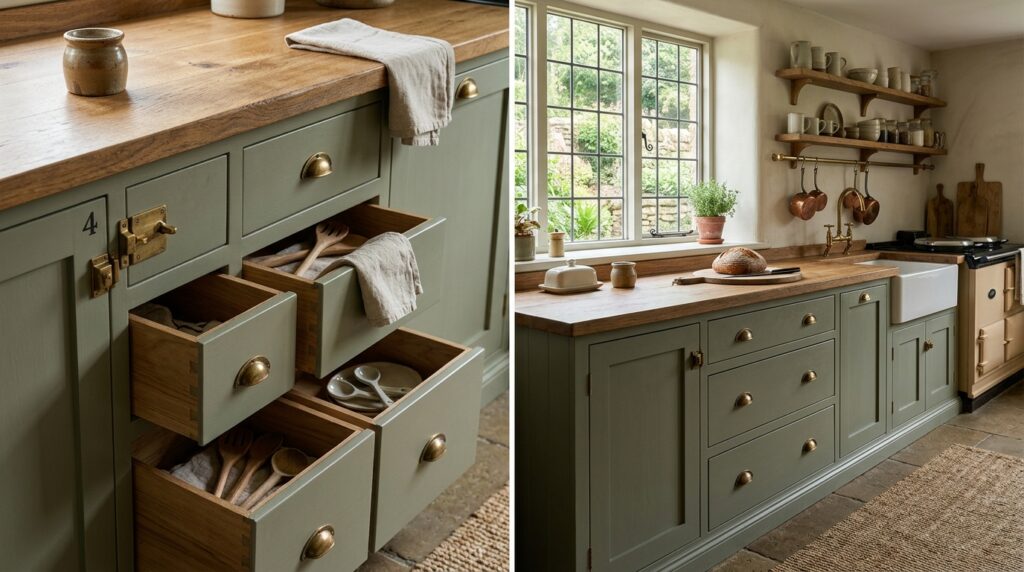
Kitchen hardware in 2026 is getting a lot more attention, and rightly so. Handles, catches, backplates, rails and hinges are not just the bits you pick once the doors are painted. They change how a kitchen feels in your hand, how the cabinetry reads in the room, and whether the whole thing looks properly made or simply dressed up at the end.
We are seeing more homeowners ask for aged brass, warm bronze, gunmetal, blackened finishes and proper cupboard catches rather than basic bar handles on every door. That can look brilliant, but only when it is planned properly. Honest truth is, hardware is one of those details that seems small until it is fitted badly, placed awkwardly, or fighting with the joinery around it.
Kitchen hardware in 2026 is becoming part of the joinery
The big shift is that kitchen hardware is becoming more furniture-like. A brass rail on the front of a shelf, a solid latch on a larder door, a neat backplate behind a knob, or a heavier appliance pull can make fitted cabinetry feel more considered and permanent. It is the kind of thing you notice every day, usually without thinking about why the kitchen feels better.
That does not mean throwing fancy metalwork at every door. In our experience, the best kitchens use hardware with a bit of restraint. A run of simple knobs might work beautifully on base units, while a larder gets a proper catch because it suits the weight and style of the door. A rail might make sense near the range or island, but it does not need to wrap around every available edge.
Good hardware needs the joinery behind it to be right. Door thickness, stile width, drawer weight, hinge choice and panel proportions all matter. If the cabinet has not been designed with the hardware in mind, you can end up with handles too close to edges, catches that feel flimsy, or screws that do not have enough timber to bite into properly.
Why handles should be chosen before the kitchen is fitted
A lot of people leave handles until late because they feel decorative. We would argue they should be chosen early, or at least narrowed down before the cabinetry is made. The position of a cup pull, knob, latch or backplate affects how rails line up, how drawers are drilled, and how comfortable the kitchen is to use.
For example, a wide drawer with a single centre pull can look clean, but it may not feel right if the drawer is heavy. Two pulls might work better, but only if the drawer front has been proportioned for them. A tall pantry door with a small knob might look charming in a brochure, but if you are opening it several times a day, a longer pull may be more practical.
- Cup pulls need enough depth and clearance for fingers.
- Backplates need to sit cleanly within the frame of the door.
- Catches need proper alignment so they close neatly every time.
- Appliance pulls need stronger fixing points because they take more force.
- Rails and hooks need backing support, not just a decorative face to screw into.
Worth getting right the first time. Drilling into painted doors after the fact is not the moment to realise the handle choice does not suit the drawer size.
Warm metals work best when they are balanced
Aged brass, bronze and gunmetal are popular because they soften a kitchen. They sit nicely with timber, painted Shaker doors, stone worktops and the deeper greens, clays and off-whites that are around at the moment. They also age better than bright, shiny finishes, especially in a busy family kitchen.
The trick is balance. If every hinge, knob, tap, light fitting, shelf rail and socket is fighting for attention, the room can start to feel busy. A good joiner will tell you where the hardware should be a feature and where it should quietly do its job. Sometimes the best decision is a simple painted knob on one run and a stronger metal detail on the larder or island.
Mixed metals can work too, despite what some people will tell you. Aged brass handles with a stainless steel range, black hinges with a brass rail, or bronze pulls near a stone worktop can all look right. What matters is that the finishes feel intentional. Random is where it starts to go wrong.
Cupboard catches, rails and backplates need real fixing points
This is where bespoke joinery earns its keep. A cheap door can look fine in a photo, but the moment you add heavier hardware, you find out what it is made of. Thin panels, poor edge material and weak fixings do not enjoy being asked to carry proper metalwork.
With bespoke cabinetry, you can build the fixing points in from the start. Rails can have proper backing. Tall doors can be hung and braced with the hardware weight in mind. Drawer fronts can be made to suit the pull, not the other way round. It sounds practical because it is, but it also affects the finished look. Hardware sits better when the joinery has been made for it.
We have seen this go wrong plenty of times on refits where someone tries to upgrade a flat-pack kitchen with expensive handles. Sometimes it helps. Sometimes it just highlights the weak proportions underneath. Good hardware cannot rescue poor cabinetry, but it can make good cabinetry feel even better.
Think about how the kitchen feels in daily use
The best kitchen hardware in 2026 is not just about trend. It is about touch. Does the drawer open easily when your hands are full? Is the larder catch satisfying rather than fiddly? Does the rail sit where you naturally reach? Can you clean around the handle without it becoming a grime trap?
Those are small questions, but they are the ones that matter once the kitchen is being used properly. A kitchen is not a showroom. It gets wet hands, shopping bags, pans, school mornings, Sunday roasts and all the usual bits of life thrown at it. Hardware needs to look good, but it also needs to stand up to being used every day.
Plan kitchen hardware with the joinery, not after it
If you are planning a new kitchen, choose the hardware direction early. You do not need every knob signed off before the first drawing, but you do need to know whether you are heading towards simple handles, proper catches, brass rails, backplates, hidden pulls or a mix of details. That gives the joiner a chance to design the doors, drawers and internal structure properly.
In our experience, this is where bespoke kitchen fitting has a clear advantage. You are not trying to force standard units to accept the detail you really wanted. You are making the cabinetry, hardware and layout work together from the start. That is how you get a kitchen that feels solid, useful and quietly well made.
Thinking about a new kitchen or a bespoke joinery project? Give us a call on 07904 794280 or message us on Facebook. We are always happy to talk through what will work, what is worth spending on, and what is best left out.