

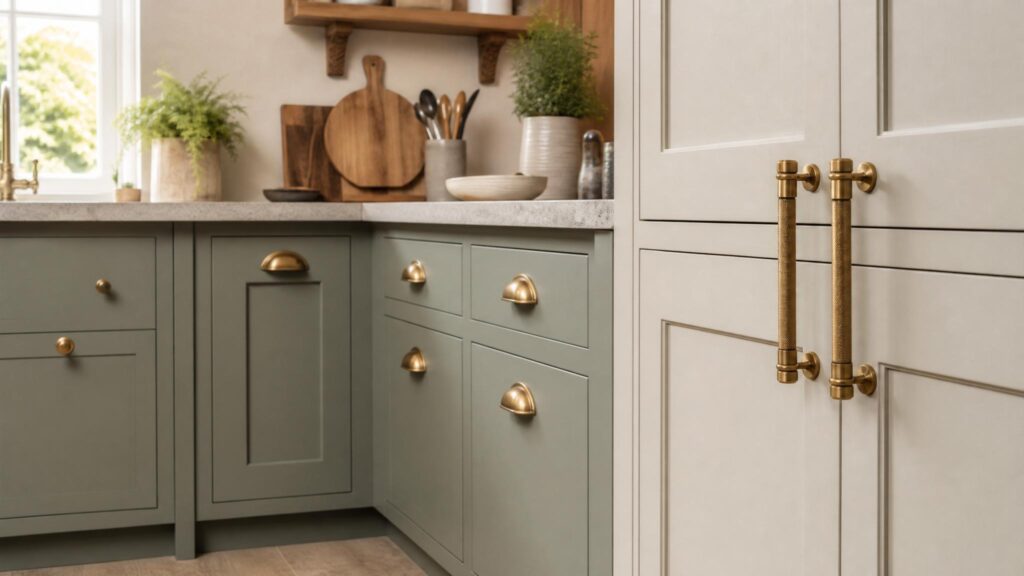
Most people spend months choosing their kitchen cabinets, their worktop, their tiles and their appliances. Then they pick the handles in ten minutes at the end of the process. It is one of the most common mistakes we see, and it is entirely understandable because handles can feel like a finishing touch. They are not. Kitchen handles in 2026 are a serious design decision, because they affect how the kitchen looks, how it feels in the hand, and how well the joinery works day after day.
Good hardware does not need to shout. In fact, the best handles often do the opposite. They quietly make the doors look better, the drawers feel better, and the whole kitchen feel more thought through. Poor hardware has the same power in reverse. Even a beautifully made cabinet can look ordinary if the handle is the wrong scale, finish, or style.
Why Kitchen Handles in 2026 Matter More Than You Think
Think about how you actually use a kitchen. You do not admire the doors from a distance every morning. You open drawers, pull out trays, reach into larders, grab mugs, and shut cupboards while cooking. The handle is the point of contact. It is the part of the joinery you touch every day, so it needs to feel right as well as look right.
This is where bespoke joinery has a real advantage. Hardware can be chosen alongside the cabinet proportions rather than bolted on at the end. Drawer widths, rail heights, door styles, handle positions, appliance clearances and sight lines can all be considered together. That is the difference between a kitchen that looks nice in a showroom and one that works naturally in a real home.
The Main Kitchen Handle Trends for 2026
There are plenty of trends around, but only a few are worth paying attention to if you want a kitchen that will still look good in five or ten years. These are the ones we think have proper staying power.
Solid Brass and Living Finishes
Brass is not new, but the way people are using it has changed. The shiny, overly polished look has given way to warmer, softer finishes. Unlacquered brass, aged brass and antique brass all bring depth to a kitchen without looking too showy. They work particularly well with painted shaker cabinets, warm white walls, oak shelving and natural stone or stone-effect worktops.
A living finish will mark and mellow over time. Some people love that. Some people hate it. The important thing is to know before you choose it. If you want everything to stay exactly as it looked on day one, go for a lacquered or sealed finish. If you like a kitchen that develops character, unlacquered brass is hard to beat.
Long Bar Handles on Tall Doors and Drawers
Long bar handles are still popular, especially on tall pantry doors, fridge housings and wide drawer banks. The key is proportion. A small handle on a tall larder door can look timid. A properly sized bar handle makes the door feel intentional and gives you a comfortable grip.
This does not mean every handle in the room has to be huge. A good kitchen often uses a family of hardware, with longer pulls on larger doors and smaller knobs or cups on standard drawers. The finish ties everything together, while the shape changes according to the job it needs to do.
Knurled Handles and Tactile Details
Knurled handles have a machined texture, usually a fine crosshatch pattern, that catches the light and gives extra grip. They suit homeowners who want a little more detail without drifting into anything fussy. Used carefully, they can look excellent on slim shaker doors, drinks cabinets, utility rooms and darker painted kitchens.
The warning here is simple. Texture should be a detail, not the whole personality of the kitchen. If the door has a strong profile, the worktop has a lot of movement, and the tiles are already busy, heavily textured handles may be one thing too many.
Cup Handles Are Still Worth Considering
Cup handles are often dismissed as traditional, but that is a bit lazy. On the right drawer front, a cup handle is practical, comfortable and visually grounded. It suits shaker kitchens because it sits naturally within the language of framed doors and drawers. It also gives drawers a bit of weight, which can be useful when the rest of the scheme is very calm.
Where cup handles can go wrong is scale and placement. Too small and they look mean. Too high or too low and the drawer front feels awkward. With bespoke work, we can position the handle so it sits properly with the rail and frame, rather than accepting whatever hole spacing a standard door happens to allow.
Handleless Kitchens: Still Popular, But Not Always Better
Handleless kitchens are not going away. They suit modern slab doors, clean lines and open-plan homes where the kitchen needs to sit quietly in the room. Push-to-open mechanisms, recessed rails and routed profiles all have their place.
That said, handleless is not automatically more modern or more refined. It can be less practical for busy households, especially where hands are wet, greasy or full. Push catches also need good quality hardware and careful fitting, otherwise they become annoying very quickly. If you are choosing handleless because it genuinely suits the design, fine. If you are choosing it because handles feel like a nuisance, it is worth slowing down and looking at better hardware options first.
Matching Handles to Your Cabinet Style
A handle should belong to the door it is fitted to. That sounds obvious, but it is where a lot of kitchen designs lose their way.
- Traditional shaker: Cup handles, round knobs and simple bar pulls all work well. Brass, bronze, nickel and pewter are usually stronger choices than bright chrome.
- Slim shaker: Keep the hardware refined. A thin bar pull, small knob or neat knurled detail can suit the cleaner frame.
- Flat slab doors: Longer linear pulls, recessed handles and handleless profiles tend to work best.
- Inset cabinetry: Choose hardware that respects the precision of the frame. This is not the place for cheap handles that sit badly or feel flimsy.
- Utility rooms: Practicality comes first. Choose hardware that is easy to grab, clean and live with.
The Finish Needs to Work With the Whole Room
Handles do not sit in isolation. They need to talk to the tap, the lighting, the hinges, the appliances and sometimes the door furniture elsewhere in the home. Matching every metal exactly can feel forced, but ignoring the relationship completely can make the room feel messy.
A good rule is to keep finishes related, even if they are not identical. A warm brass handle can sit beautifully with an aged bronze pendant or a brushed brass tap. It may look less comfortable next to very cool chrome unless there is a clear reason for the mix. Black handles can work, but they need care. On some kitchens they look sharp. On others they look like an easy showroom choice from five years ago.
Do Not Leave Kitchen Handles Until the End
The biggest bit of advice is this: choose your handles early enough for them to influence the design. If a drawer bank is going to have long horizontal pulls, that affects the spacing. If a larder door needs a tall handle, that affects where rails and panels sit. If you want cup handles, the drawer proportions need to make them look balanced.
Hardware is not just decoration. It is part of the joinery package. It deserves proper thought, because it is one of the few parts of the kitchen that has to perform visually and physically every single day.
A Small Detail That Changes the Whole Kitchen
Kitchen handles in 2026 are about more than following a finish trend. They are about proportion, grip, placement, durability and how the finished kitchen feels to live with. A well-chosen handle can make bespoke joinery feel settled and complete. A poor one can pull the whole design down.
If you are planning a new kitchen, do not treat the hardware as an afterthought. Bring it into the conversation early, look at real samples, hold them in your hand, and think about how they will work with the doors, drawers and appliances around them.
If you would like to talk through your kitchen design with someone who will give you a straight answer, give us a call on +447749 932 689 or find us on Facebook. We are based in the West Midlands and work across the Midlands region.