

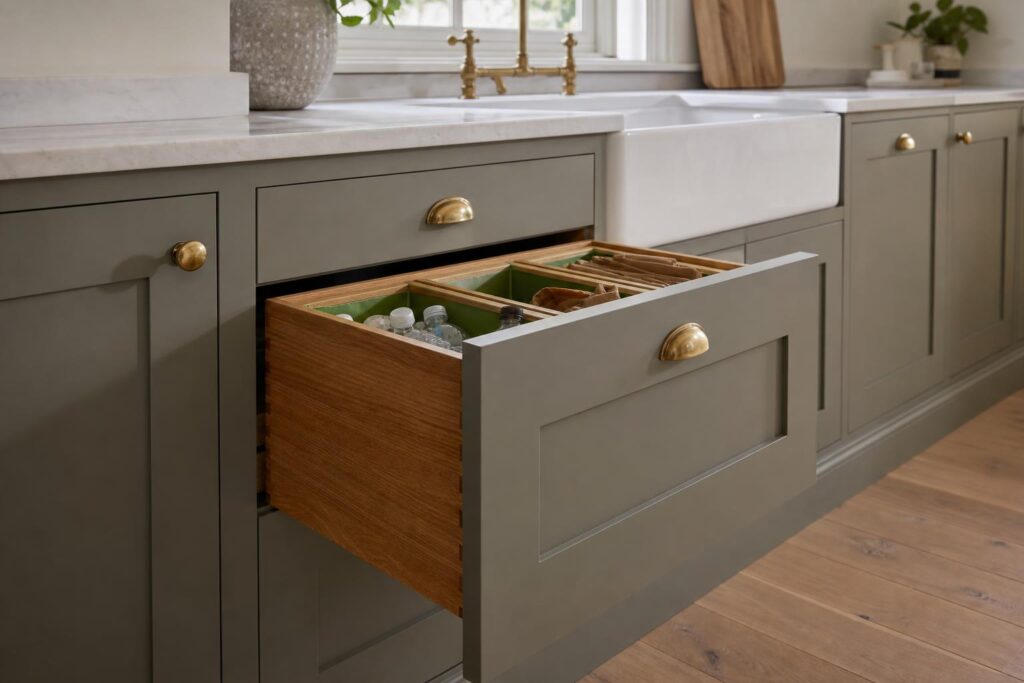
Kitchen recycling drawer joinery is not the first thing most people get excited about when planning a new kitchen. Fair enough. Doors, colours, worktops and handles are easier to picture. But the honest truth is, the bin is one of the hardest working parts of the room. If it is in the wrong place, too small, badly fitted or awkward to pull out, you will notice it every single day.
With more UK homes separating general waste, food waste, plastics, card and glass, the old single swing-bin in the corner is starting to feel clumsy. In 2026, the best kitchens are not just looking cleaner, they are working cleaner too. That means proper pull-out waste and recycling storage planned into the cabinet layout from the start.
Why kitchen recycling drawer joinery deserves early planning
A recycling drawer looks simple when it is finished. You pull the door, the bins slide out, everything has a place and the drawer closes neatly again. Getting there is not always simple. The cabinet width, runner strength, bin capacity, door fixing, plumbing, drawer box and nearby work zones all affect how well it works.
We have seen this go wrong plenty of times. A homeowner chooses a lovely sink base, then asks for bins underneath after the pipework, water filter and stop tap have already taken the best space. Or a tall recycling unit gets squeezed into a corner where the door cannot open properly. Or the bins are hidden so far from the prep area that peelings, packaging and scraps end up sitting on the worktop instead.
Worth getting right the first time. Once the kitchen is fitted, changing a waste system usually means altering cabinets, moving services or compromising on the hardware.
Where should a kitchen recycling drawer go?
In our experience, the best spot is close to the sink and prep area, but not directly in the way of the main cooking route. Think about the small movements you make all the time: rinsing vegetables, scraping plates, opening packaging, wiping down chopping boards and emptying coffee grounds. The bin wants to be near that action.
If you have a dishwasher, it often makes sense to keep the sink, dishwasher and recycling drawer in the same working run. That way one person can clear plates without crossing the room. In a larger kitchen, a second smaller waste point near an island or drinks area can be useful, but only if it earns its keep.
What does not work well is putting the main bin at the far end of the kitchen just because there is a spare 300mm gap. That gap might suit trays, chopping boards or cleaning products better. A good joiner will look at the way you actually use the room, not just where the leftover space happens to be.
Kitchen recycling drawer joinery needs the right cabinet size
Most pull-out bin systems need a sensible base cabinet width. A 300mm unit can work for a compact household or a simple two-bin setup, but it will not suit everyone. A 400mm, 500mm or 600mm cabinet gives more room for separated waste, stronger hardware and better access.
The depth matters too. Standard base units offer more options, but older homes and awkward walls are not always standard. This is where bespoke joinery helps. Rather than forcing a ready-made unit into a space that is not square, the cabinet can be built around the real measurements of the room and the waste system chosen for it.
The runners are important. A bin drawer gets loaded with weight, pulled out constantly and occasionally knocked by knees, children or shopping bags. Cheap runners feel fine in a showroom when they are empty. They feel very different after a year of daily use. Soft-close is useful, but strength and alignment matter more.
Two bins, three bins or more?
There is no perfect answer here because every household handles waste differently. Some families need more general waste capacity. Others want separate sections for mixed recycling, card, food waste and glass. Some local councils collect differently too, so the setup should match real life rather than a brochure diagram.
- A two-bin system can work well for general waste and mixed recycling.
- A three-bin system is useful if food waste or card needs its own space.
- A deeper drawer can sometimes hold smaller removable tubs for cleaning cloths, compost bags or spare liners.
- A separate under-sink caddy may still be better for food waste if the main drawer is used heavily.
Do not just chase the biggest litre capacity. Oversized bins can become heavy, awkward and slow to empty. Smaller containers emptied more often are sometimes cleaner and easier, especially in a fitted kitchen where smell and hygiene matter.
Common mistakes with pull-out recycling storage
The first mistake is leaving it until the end. By then the design is usually fixed and the bin has to fit whatever space is left. The second mistake is choosing the hardware before thinking about the door style. In-frame doors, shaker fronts and slab fronts can all need slightly different detailing so the drawer opens cleanly and sits flush when shut.
Another one is forgetting clearance. A pull-out recycling drawer needs room in front of it. If it opens into a tight walkway, opposite an island stool or into the dishwasher door, it will soon become annoying. You should be able to stand comfortably, pull the drawer fully open and use the compartments without doing a little kitchen shuffle.
Then there is ventilation and cleaning. Bins live with moisture, scraps and the odd split bag. The inside of the cabinet needs to be easy to wipe, and the system should allow tubs to lift out without scraping the door or damaging the cabinet sides.
Why bespoke joinery makes this detail better
Off-the-shelf bin units have their place, but bespoke joinery gives you more control over the awkward bits. The cabinet can be sized properly. The door front can line through with the rest of the kitchen. The drawer box can be built to suit the hardware. The plinth, service void, runners and fixings can all be thought through before anyone starts cutting.
It also means the recycling drawer can look like part of the kitchen, not an afterthought. That matters in open-plan and broken-plan homes where the kitchen is always on show. The most practical details are often the ones you do not notice because they simply work.
Kitchen recycling drawer joinery is a small detail with a big daily payoff
Nobody buys a kitchen because of the bin drawer. But plenty of people get irritated by a bad one. If you are investing in a new fitted kitchen, planning the waste and recycling setup properly is just common sense. It keeps the worktops clearer, makes cooking tidier and helps the whole room run better.
Thinking about a new kitchen or a bespoke joinery project? Give us a call on 07904 794280 or message us on Facebook. We are always happy to talk through what will work in your home before the cabinets are built.