

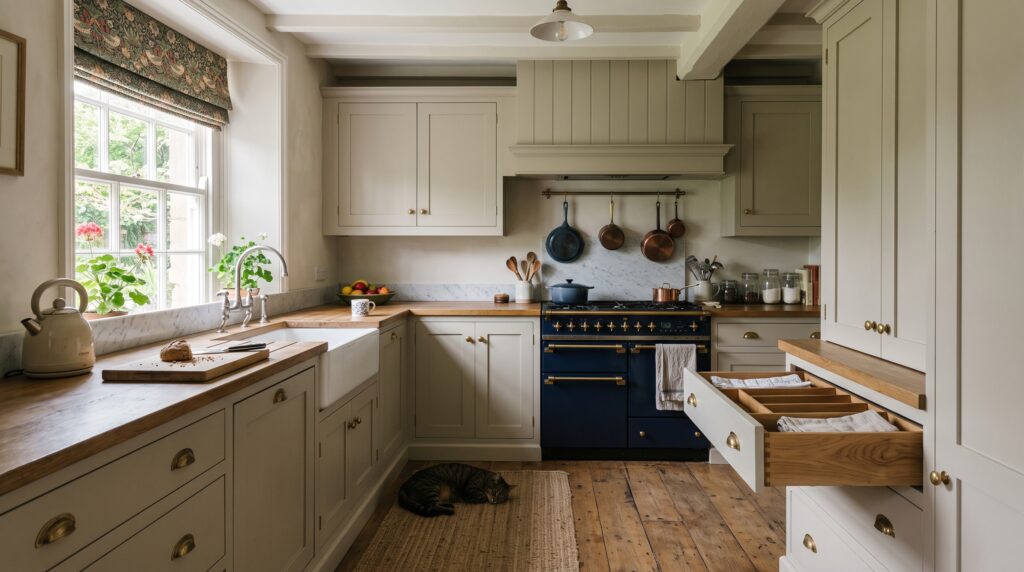
Quiet kitchen design is starting to matter more because the kitchen is no longer just where dinner gets made. It is where people work, talk, sort school bags, feed the family, make coffee before anyone else is awake and, quite often, try to get five minutes of peace. If the room clatters, hums, echoes and bangs every time someone opens a drawer, it starts to grate.
In our experience, people do not always ask for a quiet kitchen at the start. They ask for storage, a better layout, nicer doors or a proper larder. But when you talk through how the room will actually be used, noise comes up quickly. Extractors, washing machines, hard flooring, rattly drawers, thin doors and open shelves can all make a kitchen feel busier than it needs to.
The honest truth is that you cannot fix every noise with one clever product. A calmer kitchen comes from lots of small decisions made early, especially in the joinery and fitting. That is where bespoke work earns its keep.
Why quiet kitchen design is becoming a bigger trend
A few years ago, most kitchen conversations were about open-plan living. Knock a wall down, create one big sociable space, put in an island and let the kitchen become the centre of the home. There is nothing wrong with that when it is planned properly, but many homeowners have discovered the downside. One large hard-surfaced room can carry sound everywhere.
You hear the extractor while someone is watching television. You hear plates being stacked while someone is on a work call. You hear every cupboard door close because the kitchen, dining space and sitting area are all sharing the same air. It is the kind of thing you notice every day, especially in busy family homes.
That is why quiet kitchen design is becoming more practical than fashionable. It is about making the room easier to live with, not making it look like a showroom. Good joinery can help by reducing rattles, absorbing some of the harshness and giving noisy appliances and clutter a proper place to go.
Quiet kitchen design starts with the layout
Before you choose door colours or handles, it is worth thinking about where noise will come from. The sink run, dishwasher, extractor, washing machine, bins, coffee machine and prep area are usually the main culprits. If they all sit in the middle of the main living space, you will hear everything.
A good joiner will talk through the day-to-day use of the room. Where do you unload the dishwasher? Where does the kettle go? Will someone be using the island for homework while someone else cooks? Do you need the washing machine in the kitchen, or can it be moved into a utility or back kitchen area?
Sometimes the fix is simple. Put the dishwasher near the storage so unloading is quick and quiet. Keep the coffee area away from the main seating spot. Avoid placing the bin drawer right where everyone gathers. Give small appliances a cupboard rather than leaving them scattered across the worktop.
None of that sounds dramatic, but it makes a real difference once the kitchen is being used every day.
Better drawers and doors make a quieter kitchen
Cheap kitchen units often sound cheap. Thin doors, loose hinges, light drawers and poor runners all add little clunks and rattles. You might not notice them in a showroom, but you will notice them at 6.30 in the morning.
For a quieter kitchen, the basics matter:
- Properly fitted soft-close hinges that are adjusted after installation, not just fitted and forgotten
- Solid drawer boxes that do not flex when they are loaded
- Good quality runners suited to the weight they will actually carry
- Door gaps set correctly so nothing catches, taps or rubs
- Heavier, better-made doors that close with a more settled feel
Bespoke joinery also means awkward spaces can be built properly instead of forced into standard carcasses. That helps stop panels vibrating, fillers loosening and doors ending up slightly out of line. Worth getting right the first time.
The extractor needs planning early
If there is one appliance that can spoil a calm kitchen, it is the extractor. A loud extractor makes people avoid using it, then the room gets steam, grease and smells. That is not a win.
Quiet kitchen design means choosing the extraction approach before the joinery is finalised. Can the duct run be short and sensible? Is the motor powerful enough without needing to roar? Will the canopy, ceiling unit or integrated hood have enough space around it to work properly? Is the joinery being built to hide the extractor neatly without choking it?
We have seen this go wrong plenty of times when the hood is treated as an afterthought. By the time the units are ordered, there is no easy route for ducting and the only option is a noisy compromise. Plan it early and the whole room feels better.
Materials affect how the room sounds
Kitchens are full of hard surfaces. Stone worktops, tiled floors, glass, painted doors and plaster walls all bounce sound around. You do not need to turn the kitchen into a recording studio, but you do need to balance the room.
Timber can help soften the feel, especially when used for shelving, breakfast cupboards, panelling, seating or internal drawer details. Rugs, blinds, curtains and upholstered bench seating can also make a big difference, provided they suit how the household actually lives.
This is where bespoke joinery gives you more options. A built-in bench with storage can make a dining corner feel warmer and quieter. A breakfast cupboard can hide the toaster, coffee machine and kettle clutter. A larder with proper shelves can stop packets, pans and jars being crammed into noisy deep cupboards.
It is not about adding soft things for the sake of it. It is about choosing materials and storage that make the room feel settled.
Appliance housing should not be an afterthought
Integrated appliances look tidy, but they still need proper housing. If a machine is boxed in badly, it can vibrate through the units around it. If the fridge has poor ventilation, it may work harder and sound louder. If the dishwasher door is not weighted and fitted properly, it can feel clumsy every time it opens.
A careful fitting job matters here. Panels need to be fixed properly, appliance gaps need to be right and service access still needs to make sense. There is no point making a kitchen look neat if the washing machine shakes the whole run of units.
For homeowners planning a new kitchen in 2026, this is one of the best questions to ask early: where will the noisy kit go, and how will the joinery around it be built?
Open shelving is not always the calm choice
Open shelves can look lovely, and in the right place they work well. But they are not always the calmest option. Stacked plates, glasses, jars and mugs can make a room feel visually busy, and they can also add little clinks and knocks when people are cooking in a hurry.
Cupboards, pocket doors and shallow pantry storage often make day-to-day life easier. They hide the busy bits without making things hard to reach. If you like a few open shelves, keep them for the items that genuinely earn their place, not every mug in the house.
A quiet kitchen is usually a well-edited kitchen. Not bare, not cold, just properly organised.
Good fitting is what holds it all together
You can buy decent hinges, drawer runners and appliances, but poor fitting will still make the kitchen noisy. Doors need adjusting. Drawers need aligning. Panels need fixing securely. Worktops need proper support. Scribes and fillers need care, especially in older UK homes where walls and floors are rarely perfectly straight.
This is the bit people do not always see in the quote, but they feel it every day once the kitchen is finished. A kitchen that has been fitted well feels calmer because everything lands where it should. Nothing catches, wobbles or sounds hollow.
That is the difference between a kitchen that looks finished on day one and a kitchen that still feels good in five years.
Final thought on quiet kitchen design
Quiet kitchen design is not a gimmick. It is a sensible way of planning a room that gets used hard every day. Think about the noise before the kitchen is built, not after the first week of living with it.
If you are planning a new kitchen, ask your joiner about appliance positions, drawer quality, extractor routing, materials, storage and fitting details. The answers will tell you a lot about how carefully the job is being thought through.
Thinking about a new kitchen or bespoke joinery project? Give us a call on 07904 794280 or message us on Facebook at https://www.facebook.com/profile.php?id=61563756110324. We are always happy to talk through what will work properly in your home.