

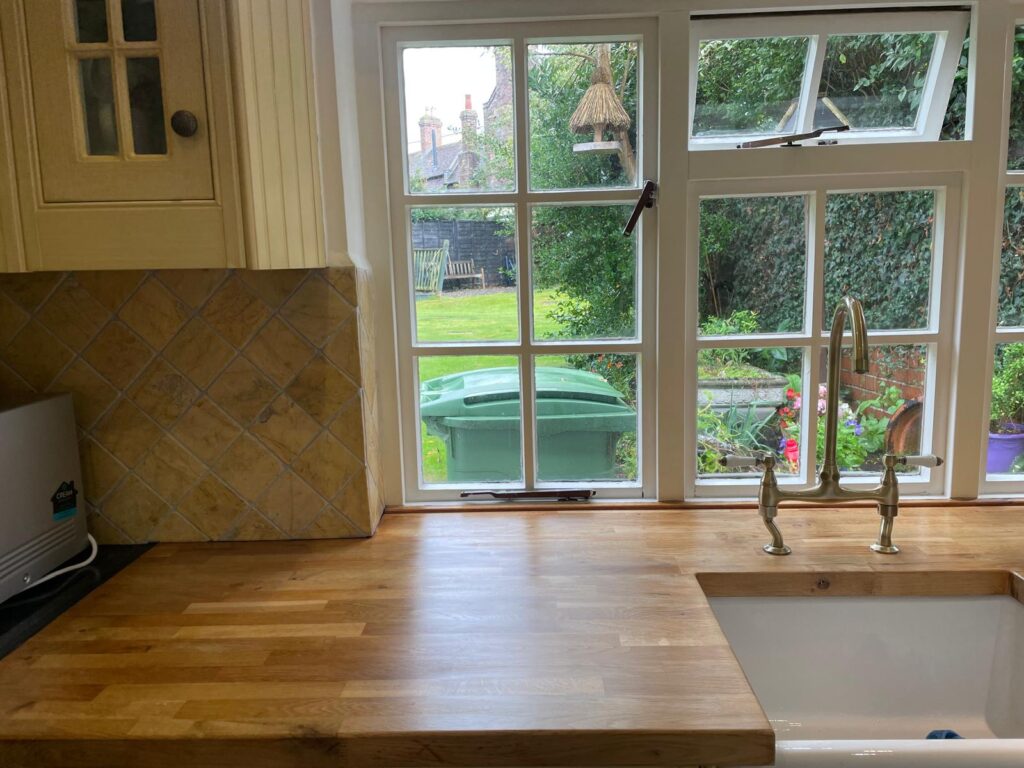
Choosing a kitchen worktop is a big decision—one that sets the tone for the entire space. Two of the most popular choices, solid wood and laminate, offer unique benefits and suit different needs, budgets, and styles. So, how do they compare, and which might be the best fit for your kitchen? Let’s dive into the pros of each and discover what makes them shine.
1. Solid Wood Worktops: Timeless, Natural, and Characterful
Solid wood worktops have a reputation for being the gold standard of kitchen surfaces. With their natural beauty, durability, and timeless appeal, it’s no wonder they’ve been a favourite for centuries.
Aesthetic Appeal
Solid wood worktops, like oak, walnut, or beech, bring a warmth and richness to any kitchen. No two pieces of wood are identical, so each worktop is truly unique. The natural grain, knots, and colour variations give it personality and character, creating a bespoke feel without having to customise a thing.
Durability and Longevity
Wood is a hard-wearing, robust material, especially when we’re talking about hardwoods like oak and maple. With the right care, a solid wood worktop can last for decades, making it an investment piece that ages beautifully. Over time, it develops a patina—a slightly deeper tone and sheen—that enhances its character.
Eco-Friendly Choice
For those keen on eco-conscious choices, solid wood can be a sustainable option, especially if you select wood sourced from responsibly managed forests. Many timber suppliers offer certification, such as FSC (Forest Stewardship Council) approved wood, to ensure it’s sustainably harvested. Plus, unlike synthetic materials, wood is biodegradable and renewable, making it a more planet-friendly choice.
Repairable and Customisable
One of the standout benefits of solid wood worktops is their repairability. Unlike other materials, wood can be sanded and refinished, meaning scratches, stains, and other minor wear and tear can be buffed away. If the surface gets damaged, a quick sanding and resealing can make it look as good as new.
Additionally, solid wood worktops can be cut to fit any space or size, and they’re relatively easy to adapt to unique kitchen layouts. They’re versatile in style, too; whether you prefer a classic farmhouse look or something sleek and modern, wood can be stained or treated to match your desired aesthetic.
Warmth and Tactility
Solid wood is warm to the touch, giving your kitchen a cosy, inviting feel. This tactile warmth is something laminate simply can’t replicate, making wood a lovely choice if you want to bring a natural element indoors.
2. Laminate Worktops: Versatile, Affordable, and Low-Maintenance
Laminate worktops are one of the most popular choices for kitchens, and with good reason. They offer a range of benefits that suit modern lifestyles, particularly when practicality and affordability are top priorities.
Cost-Effective Option
Laminate worktops are an excellent option if you want a high-quality surface that doesn’t break the bank. Laminate is made by bonding layers of kraft paper and resin under high heat and pressure, then finished with a decorative surface layer. This process makes it much cheaper to produce than natural materials like wood but without sacrificing durability.
Wide Range of Styles
One of the big perks of laminate is its design versatility. These days, laminate worktops are available in an astonishing range of colours, textures, and finishes. You can choose from designs that mimic natural materials, such as wood or stone, to achieve the look you love at a fraction of the price.
Laminate can give you that high-end look of marble or granite without the maintenance headaches. Or, if you love the appearance of wood but don’t want to deal with the upkeep, a laminate worktop with a wood-grain effect could be the perfect compromise.
Low Maintenance and Easy to Clean
One of laminate’s biggest appeals is its fuss-free maintenance. It’s a non-porous material, meaning it doesn’t absorb spills or harbour bacteria, making it ideal for kitchens where hygiene is crucial. A quick wipe with a damp cloth and mild detergent keeps it clean and looking fresh.
Laminate doesn’t require any of the special treatments that solid wood demands, like regular oiling or sanding. So, if you’re looking for a low-maintenance worktop that doesn’t need regular TLC, laminate is a strong contender.
Durability and Resistance to Stains
Quality laminate worktops are surprisingly tough. They resist stains, scratches, and moisture, all of which are big pluses in a high-traffic area like the kitchen. While they may not be as heat-resistant as some natural materials, you can still use trivets and cutting boards to protect the surface from hot pans and sharp knives.
Consistent Appearance
Unlike solid wood, which varies in tone and grain, laminate offers a consistent look across the entire surface. This uniformity can be a bonus if you’re aiming for a streamlined, contemporary kitchen design. Plus, it can be easier to match additional pieces or repairs down the line.
3. Solid Wood vs. Laminate: Which Worktop is Right for You?
Now that we’ve explored the benefits of both solid wood and laminate, let’s look at a few key considerations that can help you decide which is right for your kitchen.
Budget
If you’re working with a limited budget, laminate worktops provide a stylish, affordable option that won’t skimp on quality. For those willing to invest a little more for a long-lasting feature, solid wood worktops offer a premium feel and lasting value.
Maintenance Commitment
Solid wood worktops require more care and upkeep, including regular oiling to keep them looking their best. If you’re happy to invest in the maintenance, the reward is a beautiful, unique surface that ages gracefully. On the other hand, if you’d prefer a surface that’s quick to clean and requires minimal upkeep, laminate worktops are ideal.
Aesthetic Preferences
For a kitchen with natural warmth, charm, and a unique look, solid wood is hard to beat. If you love the idea of a textured, organic worktop that changes over time, wood is likely to be the perfect choice. However, if your heart is set on a specific colour or finish—perhaps a marble effect or high-gloss look—laminate’s wide variety of options makes it easy to find a style that suits your taste.
Longevity
Both solid wood and laminate worktops are durable, but solid wood has the edge in terms of longevity, thanks to its repairability and durability. A well-maintained solid wood worktop can last decades, while laminate may need to be replaced sooner, though it will still last for years if cared for properly.
4. The Verdict: Solid Wood or Laminate?
Choosing between solid wood and laminate depends on what you value most in a worktop. If you crave natural beauty, a unique look, and don’t mind putting in a little extra care, solid wood can make a stunning, long-lasting addition to your kitchen. The warmth, charm, and resilience of real wood bring a sense of heritage and sophistication that is hard to replicate.
Alternatively, if you want a practical, affordable, and low-maintenance worktop that still offers plenty of style, laminate is a smart choice. With its vast range of designs, easy cleaning, and affordability, laminate worktops are a fantastic way to get the kitchen look you want without the maintenance hassle.
Both options have their unique strengths, so whatever your choice, you’ll have a worktop that adds function and style to your kitchen. The key is to select the material that aligns with your lifestyle, budget, and aesthetic goals—whether that’s the natural elegance of wood or the versatility of laminate.